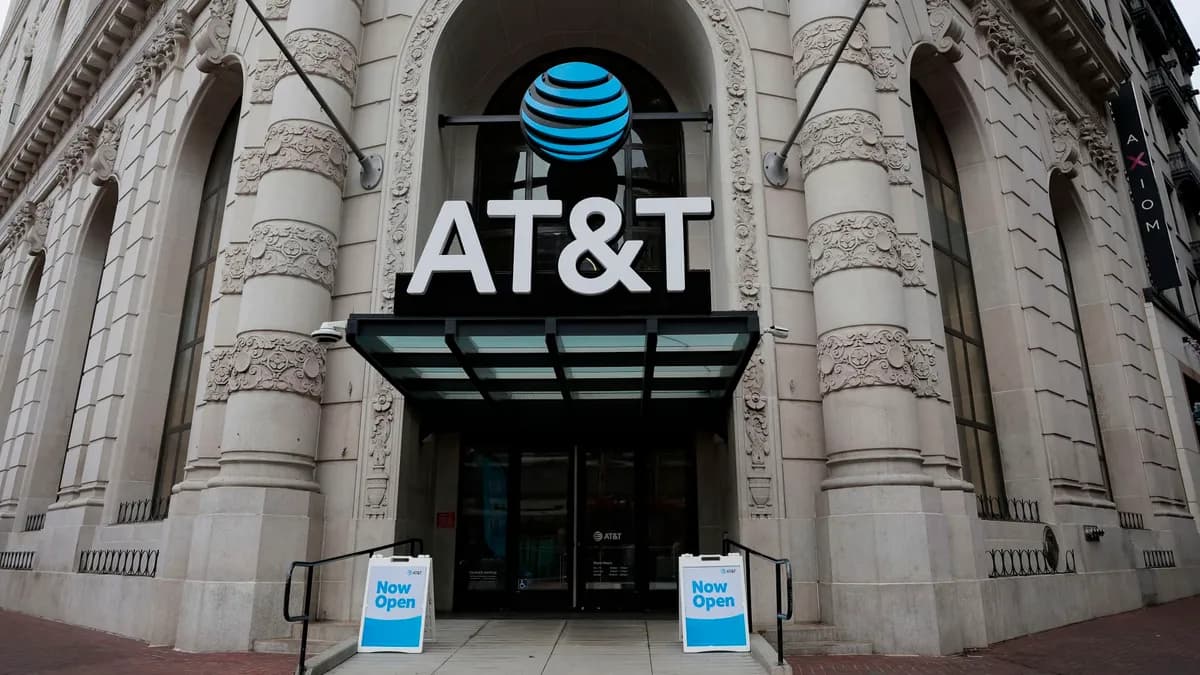
Bank of America has named several stocks that still have room for growth despite market fears, including AT&T, US Bancorp and Krispy Kreme.
Bank of America recommends these stocks with significant upside potential in an uncertain market
The global stock market climate remains characterized by high volatility. Geopolitical uncertainties, persistent inflation above central bank targets, and monetary policy adjustments create an environment where investors seek attractive and resilient investments. In this context, Bank of America analysts have identified several stocks that they believe still have significant upside potential despite market fluctuations. The analysis is based on criteria of financial solidity, ability to generate sustainable cash flows, and specific catalysts capable of supporting medium-term valuation.
AT&T: A safe haven in telecommunications
AT&T is among Bank of America's recommendations, not because the company has recently shown explosive growth, but because it has fundamentals that position it as a "safe haven" in a diversified portfolio. The company has a robust balance sheet, characterized by a well-managed debt ratio and sufficient cash on hand to absorb market shocks. Additionally, AT&T offers an attractive dividend yield, making it particularly appealing to investors seeking stable income in a context of fluctuating interest rates. In periods where bond yields are under upward pressure, high-dividend stocks like AT&T offer a comparable yield alternative while retaining the potential for capital gains tied to communication service demand recovery.
Analysts also note that AT&T's ability to generate free cash flow allows it to finance fiber optic and 5G investments without resorting to excessive debt. This investment dynamic supports long-term growth prospects, even if short-term results remain modest. Furthermore, the geographical diversification of the client portfolio, along with a presence in high-barrier-to-entry segments, reinforces the stock's resilience against economic cycles.
US Bancorp: A solid bank with prudent management
US Bancorp, the holding company of the largest regional bank in the United States, is also highlighted by Bank of America. The solidity of its capital, measured by the Tier 1 capital ratio, is well above regulatory requirements, giving the bank room to support credit activity even during monetary tightening periods. Analysts point to regular earnings growth, driven by prudent credit risk management and measured expansion of the loan portfolio for businesses and individuals.
In an environment where interest rates are rising, banks generally benefit from an expansion of their net interest margin. US Bancorp has been able to capitalize on this dynamic through progressive pricing of its credit products while maintaining a relatively low default rate. This ability to transform rate hikes into additional revenues while controlling potential losses reinforces analysts' conviction in the stock's ability to outperform the banking sector average.
Krispy Kreme: A golden donut
The case of Krispy Kreme (DNUT) perfectly illustrates how a consumer goods company can turn cost challenges into growth opportunities. After publishing its latest results, Bank of America analysts, led by Sara Senatore, confirmed their confidence in the stock despite persistent inflationary pressures on commodities. Indeed, the company maintained its adjusted EBITDA guidance for the sixth quarter (F26), even though prices for edible oils and fuel have risen since the second quarter. This performance is interpreted as proof that turnaround savings are now durably integrated into the operational model.
Two major catalysts support Krispy Kreme's dynamic. The first lies in the "Fresh Delivery" service, which extends the brand's presence in supermarket aisles and retail points of sale, allowing it to reach a wider customer base, increase off-premise sales volume, and benefit from additional margin through distribution. The second catalyst is the company's geographic expansion strategy: aiming to reach 15,000 points of sale in the United States and Canada, an objective that, if achieved, should generate significant economies of scale in both procurement costs and marketing expenses.
On the stock market, Krispy Kreme shares have risen by 20% over the past month, reflecting market confidence in the company's ability to overcome consumption headwinds. Bank of America's "Buy" rating is based on a combination of a distinctive product, the ability to exploit existing capacity to improve returns, and a long-term growth outlook supported by store expansion.
Madison Square Garden Entertainment: The power of an irreplaceable portfolio of venues
Madison Square Garden Entertainment (MSGE) has benefited from increased visibility thanks to the participation of artist Harry Styles, who made an exceptional contribution to the quarter's results. Analysts, led by Peter Henderson, emphasize that this exceptional event should not overshadow the underlying solidity of the live entertainment venue portfolio, considered irreplaceable in the sector. The capacity utilization, dynamic pricing strategies, and ancillary revenues such as food and beverage, merchandise, and VIP services are the main growth levers for MSGE.
Another seasonal factor, the Christmas season, represents an additional revenue driver. The "Christmas Spectacular" show is expected to have 231 performances this year, compared to 215 last year, representing a 7.5% increase in the number of shows. Meanwhile, advance ticket sales are progressing at a pace above expectations, indicating strong demand for festive events. This dynamic is reflected in the stock's performance, which has risen by 48% since the beginning of the year.
Bank of America analysts emphasize that the combination of a diverse content offering, effective capacity management, and the ability to monetize complementary services creates an upward revenue trajectory, even when the macroeconomic context remains uncertain. The resilience of MSGE's economic model is based on the scarcity of assets – premium-located venues – which offers a high barrier to entry for potential competitors.
L3 Harris Technologies: Aerospace and defense on the rise
L3 Harris Technologies, a major player in the aerospace and defense sector, has received very favorable feedback from Bank of America. Analyst Ronald Epstein, after meeting with the new CEO, identified three clear strategic priorities that he believes will position the company as a leader in several market segments. Although the source text is truncated, it is evident that the management is focusing on technological innovation, product portfolio optimization, and expansion of government contracts to drive growth.
The defense sector benefits from a supportive public spending environment, particularly due to current geopolitical tensions. High budgets for military modernization programs create sustained demand for communication systems, advanced sensors, and cybersecurity solutions – areas where L3 Harris has recognized expertise. The company's ability to deliver integrated solutions, combined with a diverse client base (United States, European allies, Pacific partners), reinforces the visibility of its medium-term revenue streams.
Furthermore, L3 Harris' cost structure, focused on controlling operating expenses while investing in research and development, allows it to maintain attractive operating margins. This financial discipline, combined with a portfolio of long-term contracts, ensures stable cash flows even when public spending cycles fluctuate slightly.
Analysis of the macroeconomic context and underlying mechanisms
The common thread that connects these recommendations is their ability to offer yields in a market characterized by increased volatility. Several economic mechanisms explain why these stocks are perceived as attractive. Firstly, companies with robust free cash flow, like AT&T and US Bancorp, can support their dividends and reinvest in growth without relying excessively on external financing, protecting them against interest rate hikes.
Secondly, consumer goods companies like Krispy Kreme that succeed in absorbing input cost increases (edible oils, fuel) through economies of scale or operational efficiency gains improve their EBITDA margin. The fact that Krispy Kreme maintained its adjusted EBITDA guidance despite commodity price increases shows that turnaround savings are now durably integrated into the operating model.
Thirdly, live entertainment companies like MSGE benefit from recurring revenues tied to venue rentals and ticket sales, which are partially indexed to inflation via dynamic pricing. Seasonality, illustrated by the "Christmas Spectacular", adds an additional leverage effect, as additional shows increase the average revenue per seat without requiring significant capital investment.
Finally, the defense sector, represented by L3 Harris, operates within a budgetary framework where public spending is often adjusted according to geopolitical priorities rather than traditional economic cycles. Even during monetary tightening periods, long-term contracts ensure stable revenue streams, and companies able to innovate quickly retain a competitive advantage.
Implications for investors
For investors, Bank of America's recommendation is based on a sector-diversified approach that combines income stocks (AT&T, US Bancorp) with high-growth potential stocks (Krispy Kreme, MSGE, L3 Harris). This strategy aims to balance market volatility risk while capturing specific upside opportunities. Analysts emphasize the importance of monitoring key indicators such as maintained EBITDA guidance, venue occupancy rates, store expansion progress, and strategic decisions by leadership, particularly at L3 Harris.
In summary, despite an uncertain macroeconomic environment, the stocks selected by Bank of America offer risk-return profiles that meet the expectations of investors seeking both stability and upside potential. Close monitoring of quarterly performances, growth initiatives, and economic evolutions will remain essential to validate the underlying hypotheses of these recommendations.