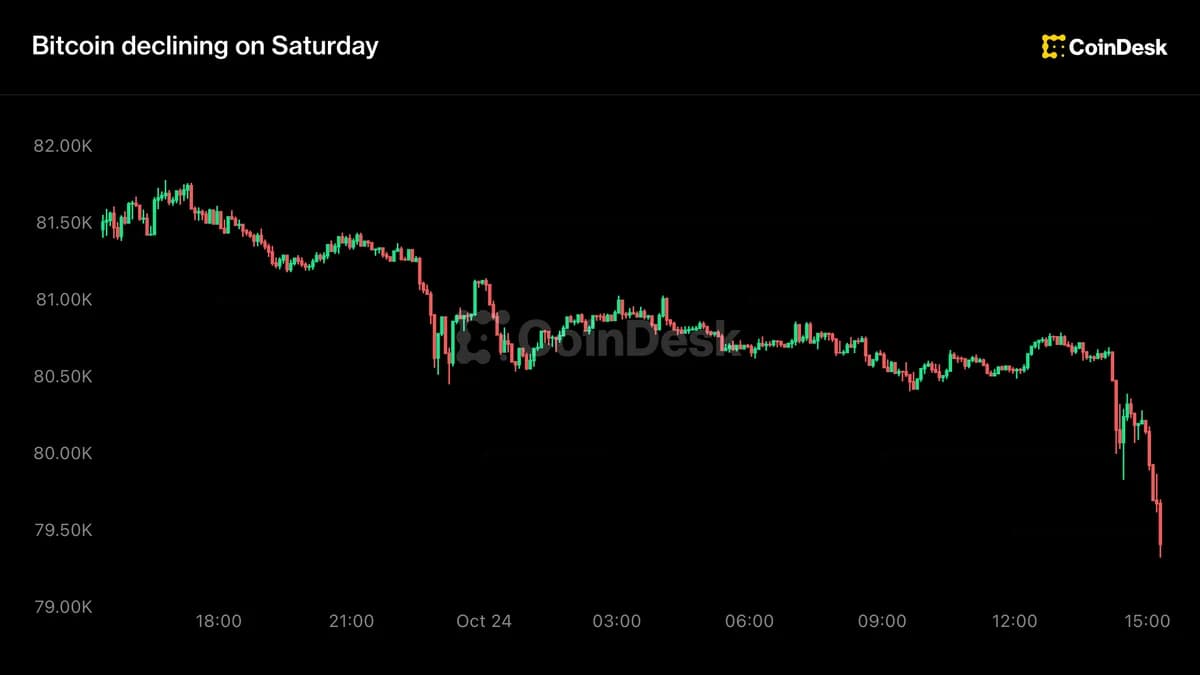
Bitcoin Slips Below 80,000 USD After U.S. Evacuations in Middle East
Bitcoin fell to 79,700 USD, a drop of -2.2% in 24 hours, following significant U.S. evacuations in the Middle East due to potential Iranian attacks. The retreat also affected Ether, XRP, and Solana, which lost between 3 and 4%. The crypto market is sliding towards its weekly lows.
Bitcoin crossed the 80,000 USD mark for the first time in over a month, settling at 79,700 USD, down by 2.2% in 24 hours, due to U.S. evacuations in the Middle East.
Bitcoin Drops Below 80,000 USD Following U.S. Evacuations in Middle East
The Bitcoin reached its lowest level in over a month, slipping to 79,700 USD after a daily drop of 2.2%, according to CoinDesk. This correction comes as the overall crypto market faces widespread selling pressure, pushing investors to seek safer havens.
The Bitcoin decline has a domino effect on major cryptocurrencies: Ether, XRP, and Solana show drops between 3% and 4% over the same period. The overall market sentiment is hardening, reminiscent of previous episodes of volatility triggered by major geopolitical events.
U.S. Evacuations Triggered by Threat of Iranian Attacks
The Wall Street Journal reported that the U.S. is rapidly evacuating personnel across the Middle East due to a threat of Iranian attacks. According to a Friday memo from Jay Clayton, Director of National Intelligence, Iran has "substantially increased its efforts to target American personnel," with assassination plans "at an advanced stage" in the region.
These evacuations exceed the initial announcements of Saudi diplomatic personnel withdrawal, highlighting the rapid escalation of tension. The U.S. government has intensified protection for its citizens, adding uncertainty to global financial markets.
Simultaneous Reaction of Major Cryptocurrencies: Ether, XRP, and Solana Drop by 3-4%
In parallel with Bitcoin, Ether, XRP, and Solana have lost between 3% and 4% over the last 24 hours, reflecting a strong correlation between digital assets in response to geopolitical shocks. The trading volume on these chains has shown a clear increase in sales, indicating profit-taking or a flight to perceived safer assets.
Exchange platforms report an increase in fiat currency withdrawals, particularly in dollars, as investors seek to reduce their crypto-asset exposure. This dynamic reinforces the perception of increased risk aversion in the sector.
On-Chain Analysis and Market Dynamics: Selling Pressure and Lack of Support
On-chain data published by CoinDesk indicates a net outflow of Bitcoin to off-exchange wallets, reflecting selling pressure outside trading platforms. The number of active addresses has decreased, confirming the disengagement of active network participants.
Meanwhile, institutional flows into Bitcoin-listed funds remain stagnant, limiting demand support. The absence of new institutional purchases increases price vulnerability to negative news.
Technical Scenarios for Bitcoin: Key Support Levels and Short-Term Prospects
Technically, Bitcoin is testing the major support level around 78,500 USD, a level that served as a floor during the previous retracement in August. If this threshold gives way, the next support zone lies near 75,000 USD, an important psychological level.
Conversely, immediate resistance is around 81,500 USD, above which the price could resume its upward trend. Analysts are also monitoring trading volume to confirm the strength of the upward or downward movement.
Impact on Crypto-Asset Trading in Europe
European investors, including French ones, see their crypto portfolios affected by the same selling dynamic. Local trading platforms report an increase in triggered stop-loss orders on BTC/EUR and ETH/EUR pairs.
For actors willing to remain exposed, Bitcoin-listed ETFs in Europe offer a less volatile alternative, although management fees remain a factor to consider. Caution remains advised while the Middle East geopolitical situation remains uncertain.