Paraguay’s state utility plans to let all special cryptocurrency power contracts expire on Dec. 31, 2027, as domestic electricity demand grows and artificial intelligence companies compete for cheap hydropower.
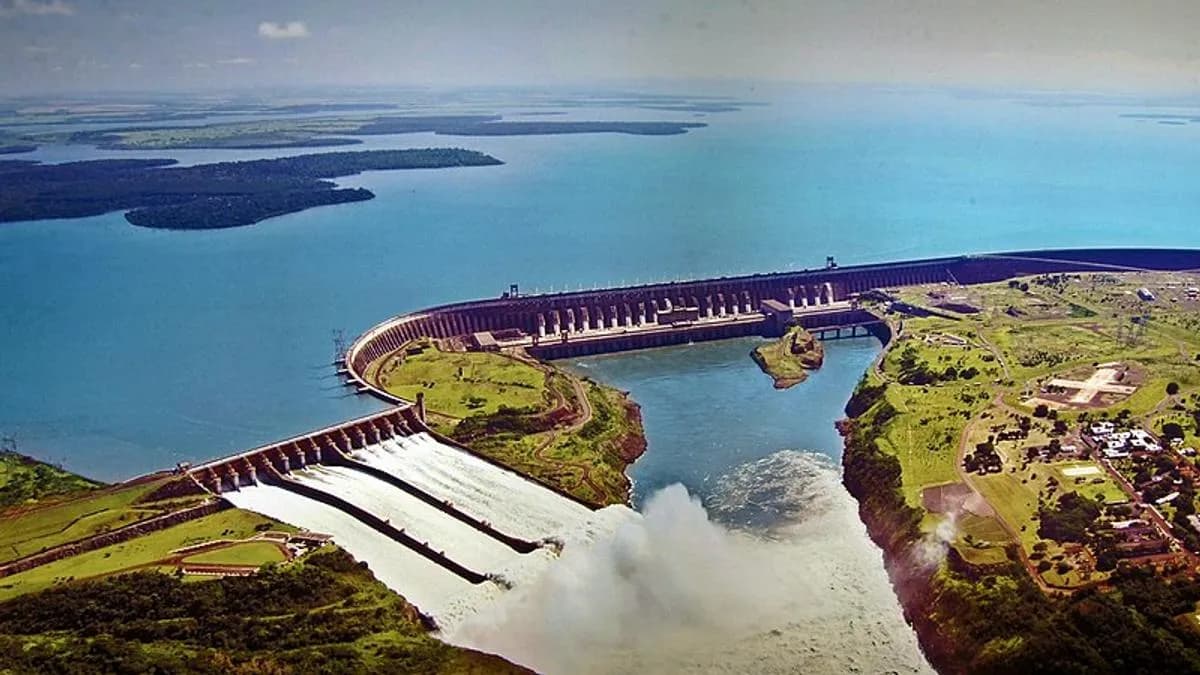
Paraguay's state-owned utility, the National Administration of Electricity (ANDE), has announced that all special electricity contracts dedicated to crypto-assets will expire on Dec. 31, 2027. This deadline is described as 'non-negotiable' by authorities, who emphasize that domestic electricity demand is increasing at a rapid pace. In 2025, nearly 88% of national production came from hydropower surpluses, mainly generated by the Itaipu Dam, one of the largest in the world with an installed capacity of 14,000 MW. This abundance allowed the state to sell at cost to foreign Bitcoin mining actors, generating around $350 million in public revenues each year.
ANDE's transmission master plan projects national demand to grow by about 8% per year until 2027, and then by 5% per year thereafter. This trend is driven by increasing urbanization, industrialization, and the rise of new energy-intensive sectors, notably artificial intelligence (AI). The Paraguayan government finds itself at a crossroads: it must balance the need to secure domestic supply with the desire to maintain energy export revenues.
For Bitcoin miners, electricity represents the most significant expense, often exceeding 60% of total operating costs. The economic model relies on converting energy into new Bitcoin, rewarded for each block mined. Therefore, industry actors constantly seek jurisdictions where the price of a kilowatt-hour (kWh) is the lowest and where the climate allows for natural cooling of machines, limiting air conditioning expenses. Regions like Iceland or Scandinavia initially attracted installations due to their cold climates and cheap renewable energy sources.
Paraguay offered a rare combination: abundant, low-cost hydroelectric energy and a subtropical temperature that, thanks to local humidity and winds, reduces the need for active cooling. As of April 2026, ANDE had allocated around 944 MW to miners, representing nearly 13% of Paraguay's share of the Itaipu Dam. This volume of energy supported an estimated hashing capacity of several exahash per second, placing the country fourth worldwide in Bitcoin mining hubs. The tax revenues generated by these contracts represented a non-negligible portion of the state's budget, which relied on the $350 million annual income to fund infrastructure projects and social programs.
The Paraguayan energy landscape is now disrupted by the emergence of artificial intelligence as a new massive consumer of electricity. A consortium linked to the $12 billion Iguazú AI City project, backed by Founders Fund venture capital fund, recently signed a 15-year contract with ANDE to power an AI-focused campus. Data centers hosting text generation models, computer vision, and deep learning consume comparable or even greater amounts of energy than Bitcoin mining.
This competition creates direct pressure on available energy reserves for miners. HIVE Digital Technologies, which operates a significant portion of Paraguay's mining fleet, sees 77% of its mining capacity located in the country threatened by power reallocation to AI projects. The risk of substantial contractual allocation reductions could force these companies to migrate their operations to other jurisdictions, resulting in lost revenues for the country and potentially a decrease in Paraguay's global hashrate share.
Faced with these challenges, ANDE engineers have proposed capping the sum of electricity allocations for crypto mining, AI, and data centers at 700 MW. Beyond this threshold, energy distribution would be subject to market price auctions, which should be significantly higher than the preferential rates currently applied to miners. This measure aims to balance public funding needs, ensure national grid stability, and meet growing domestic demand.
The auction mechanism would allow the state to maximize revenues from the sale of excess energy while incentivizing actors to optimize their consumption. Miners who wish to maintain their operations in Paraguay will need to evaluate the profitability of their activities in light of potentially higher kWh costs. This dynamic could also encourage the adoption of more energy-efficient technologies, such as liquid cooling or the use of residual energy for other industrial applications.
In practice, the 700 MW cap represents a reduction of about 25% compared to the current 944 MW allocated to miners. If auctions result in an average price of $44/MWh – the rate that was in effect for special contracts before they expired – annual additional revenues could exceed $100 million, helping to offset the anticipated budget deficit due to increased domestic consumption.
The Paraguayan government also justifies this realignment by its desire to support national technological development. By favoring AI projects, the country hopes to create qualified jobs, attract foreign investment in the digital sector, and position Paraguay as a regional hub for cutting-edge technologies. This strategy aligns with the broader plan for economic diversification, aiming to reduce historical dependence on the agricultural sector.
The public debate surrounding these decisions has highlighted tensions between short-term economic interests – immediate mining revenues – and longer-term ambitions related to energy sovereignty and digital transition. Stakeholders, including mining associations, AI sector representatives, and civil society organizations, have called for consultations to ensure an equitable and transparent transition.
In summary, ANDE's decision to let mining contracts expire at the end of 2027, combined with the implementation of a 700 MW cap and capacity auctions, constitutes a major strategic shift in Paraguay's energy landscape. It reflects the growing pressure exerted by new energy-intensive technologies while emphasizing the importance for the country of securing domestic supply and maximizing fiscal returns from its abundant natural resources.