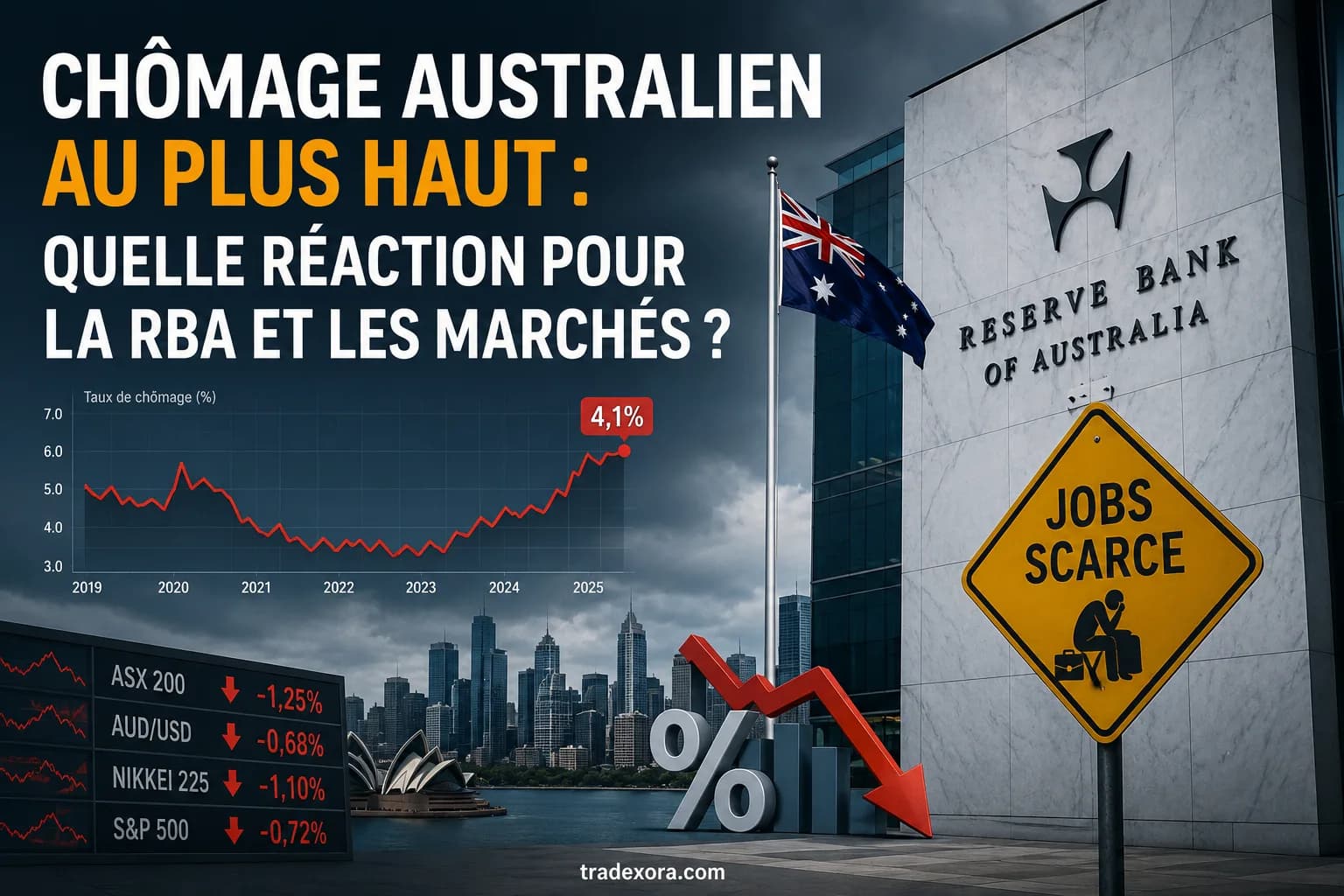
Australian Unemployment Hits a High: What's the Reaction for the RBA and Markets?
The Australian unemployment rate climbs to a 4.5-year high, signaling a sharper-than-expected slowdown in the labor market. This unexpected economic data casts doubt on the Reserve Bank of Australia's (RBA) future decisions.
Australia has released employment figures that have surprised analysts and financial markets. The unemployment rate reached 4.5% in April, a level not seen since November 2021. This increase, which is higher than anticipated, indicates a notable cooling of the Australian labor market, raising questions about the future trajectory of interest rates set by the Reserve Bank of Australia (RBA).
A Coughing Labor Market: Key Figures
The official statistics published showed a significant increase in the number of unemployed people, exceeding economists' expectations, who had predicted relative stability or even a slight decrease. The rise in the unemployment rate to 4.5% marks a turning point compared to previous months when the labor market showed remarkable resilience. This development is interpreted by many observers as a sign that restrictive monetary policies are beginning to produce their effects more strongly than expected on the real economy.
Several factors could explain this deterioration. The gradual end of post-pandemic support measures, combined with an uncertain global economic environment, is weighing on overall demand. Companies, facing higher production costs and potentially declining demand, may slow down hiring or even make staffing adjustments. The detailed release of the data revealed a slight decrease in the number of jobs created compared to previous months, as well as an increase in the number of people actively seeking employment, increasing pressure on the market.
Why This Rise in Unemployment is Crucial for the RBA
This rise in unemployment has direct implications for the RBA's monetary policy. Until now, the Australian central bank has maintained a cautious stance, oscillating between maintaining high interest rates to combat inflation and the need not to stifle an economy already under pressure. The April figures change the game. They suggest that inflation may be slowing down faster than expected, making further rate hikes less likely, and even a medium-term easing conceivable if the trend continues.
Financial markets reacted almost instantly to this data. Traders have revised down their expectations for further interest rate hikes. The probability of one or more additional increases, which was still being considered not long ago, has significantly diminished. This reassessment of expectations can lead to movements in bond markets, with a potential decrease in yields, and in foreign exchange markets, affecting the Australian dollar. The RBA is now under pressure to adapt its communication and strategy in the face of these new economic realities.
Impact for the French Investor: Caution and Opportunities
For the French investor, this economic news from Australia, although geographically distant, is not without consequences. Global financial markets are increasingly interconnected. An economic slowdown in a developed economy like Australia can have repercussions on overall investor sentiment and international capital flows. It is therefore essential to understand the implications for diversifying investments and potentially identifying opportunities.
Stocks and ETFs: The rise in Australian unemployment could signal a less favorable environment for companies heavily exposed to Australian domestic demand. Commodity-related stocks, of which Australia is a major exporter, could also be affected by a global economic slowdown induced by such data. For investors holding MSCI World ETFs, the direct impact is diluted, but a hypothetical global recession would affect all markets. It might be wise to look towards more defensive sectors or those benefiting from strong structural trends, less dependent on short-term economic cycles.
PEA and Life Insurance: Within a French Stock Savings Plan (PEA), favoring internationally diversified French or European companies could be a relevant strategy. Direct exposure to Australian markets via specific ETFs is generally limited in a PEA. For life insurance, units of account invested in globally diversified funds will already include some exposure, albeit limited, to developed markets like Australia. The important thing is to maintain a diversified asset allocation consistent with one's risk profile. Potentially lower bond yields in a scenario of falling interest rates could make euro funds or European corporate bonds more attractive for a portion of the portfolio, but with a risk premium to be carefully assessed.
Investment Strategy: Faced with increased uncertainty about global growth and monetary policies, diversification remains key. It is advisable not to overreact to isolated news but to integrate this information into a long-term vision. Investors could consider increasing their exposure to assets considered safer or favor investment strategies that benefit from volatility, such as Dollar Cost Averaging (DCA), which allows investing fixed amounts at regular intervals, thus smoothing the average purchase price.
Outlook: Doubt Creeps In
The release of the Australian unemployment rate marks a potential turning point in understanding global economic dynamics. If this labor market slowdown is confirmed in the coming months, it could prompt other central banks to adopt a more accommodating stance, or at least to curb their own rate hikes. The RBA, in its upcoming communication, will likely have to navigate between fighting inflation that could prove more persistent than expected and the risk of triggering a deeper recession.
The next Australian economic indicators, particularly those concerning inflation and consumer confidence, will be scrutinized with the utmost attention. Markets will seek to confirm whether this unemployment peak is an isolated event or the beginning of a more pronounced downward trend. This uncertainty could translate into increased volatility in global financial markets, requiring constant vigilance from investors.
Disclaimer: This article was written based on public information and does not constitute investment advice in any way. Past performance is not indicative of future results. Investing involves the risk of capital loss. It is recommended to consult a professional before making any investment decisions.