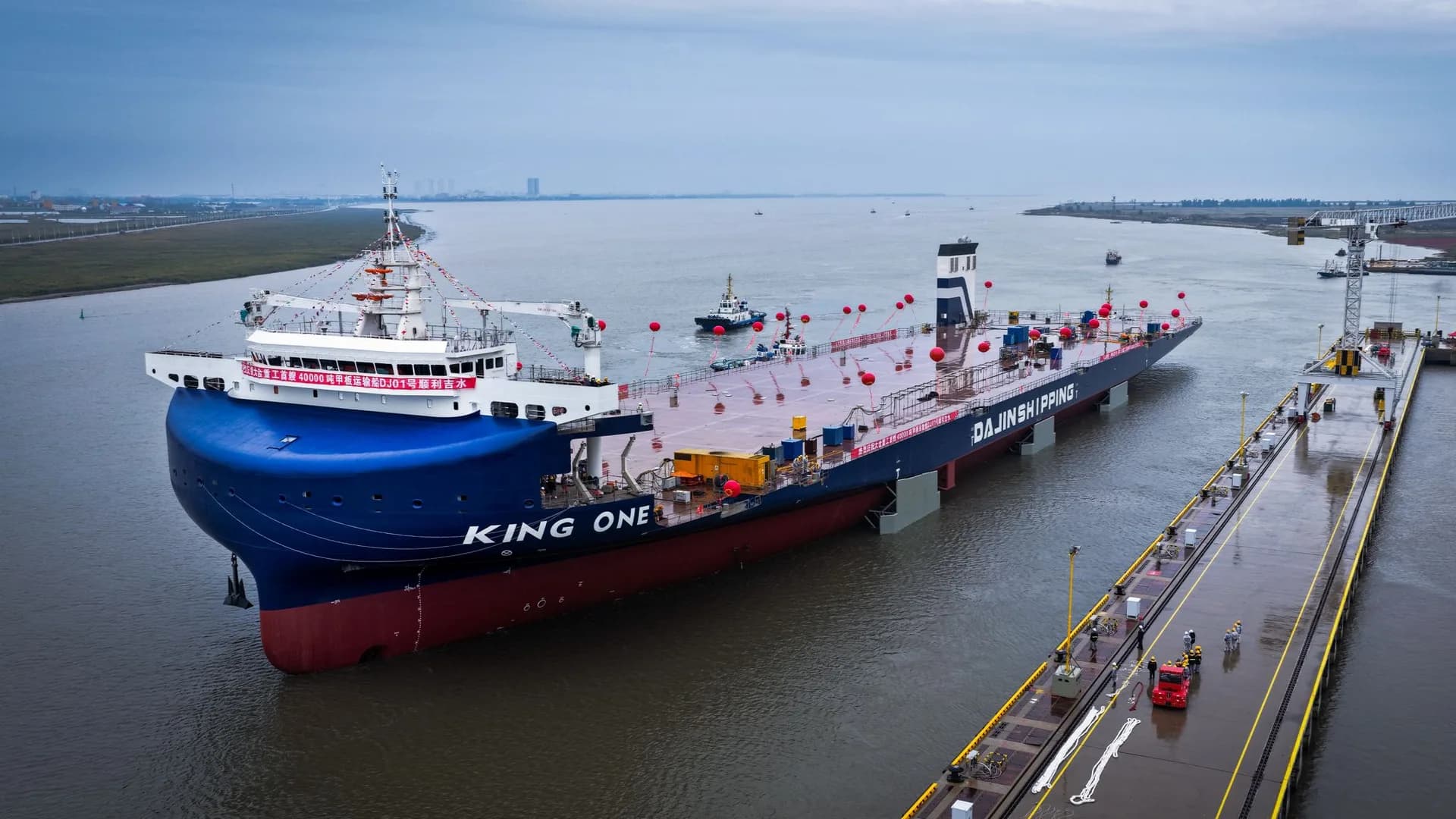
Dajin Heavy Weighs Heavily After Its Introduction in Hong Kong
Dajin Heavy Industry's shares plummeted by a third in their Hong Kong debut, on Friday, June 5, 2026, after an $847 million fundraising, according to Bloomberg. This significant decline has sparked the interest of investors and analysts, who are seeking to understand the underlying factors behind this development.
This introduction is the largest in the city in over six weeks, according to Bloomberg. The $847 million raised is a considerable sum, which could have implications for the region's financial markets. It is essential to understand the economic context and the mechanisms that led to this introduction and the subsequent decline in shares.
A company's introduction to the stock market is a complex process that involves raising funds from investors. In the case of Dajin Heavy Industry, the company chose to launch on the Hong Kong market, which is one of the region's main financial centers. The decision to launch on this market is likely linked to the presence of potential investors and the market's liquidity.
The $847 million fundraising is a considerable amount, which could be used to finance the company's activities, such as the construction of wind turbines. However, the negative reception of the public offering by investors led to a decline in shares. It is likely that investors were disappointed by the value offered by the company, which led to a loss of confidence in the enterprise.
Analysts attribute this decline to a poor reception of Dajin Heavy Industry's public offering, which was launched to raise funds to finance its wind turbine construction activities. Investors seem to have been unhappy with the value offered by the company, which led to a decline in shares.
It is essential to understand that investors evaluate companies based on their growth potential and ability to generate profits. If investors believe that the value offered by the company is lower than its actual potential, they may be disappointed and decide to sell their shares, leading to a decline in the stock price.
This introduction has also sparked the interest of investors, who have closely watched the performance of Dajin Heavy Industry's shares. Analysts believe that this introduction could serve as a reference for other companies that wish to launch public offerings in Hong Kong.
It is likely that companies considering launching on the Hong Kong market will closely study Dajin Heavy Industry's introduction and the factors that contributed to the decline in shares. Companies could learn from this experience and adjust their strategy to avoid making the same mistakes.
Impact on Asian Assets
This news has also had an impact on Asian assets, particularly the indices of the Hong Kong and Shanghai stock exchanges. Analysts believe that this introduction could have a positive effect on Asian markets, making them believe that investors are interested in the region's companies.
It is essential to understand that financial markets are interconnected and that events occurring on one market can have repercussions on other markets. The performance of Asian assets could be influenced by investor confidence in the region and their perception of economic stability.
Analysts are Divided
However, analysts are not all in agreement on the future performance of Dajin Heavy Industry's shares. Some believe that the shares will continue to decline, while others believe that they will stabilize and even increase.
It is likely that analysts will evaluate the company's fundamentals, such as its revenue, profits, and debt, to determine its growth potential. Analysts may also take into account macroeconomic factors, such as the region's economic growth and monetary policies, to assess the potential impact on the company.
The Economic Context
The current economic context is characterized by a slowing global economic growth, low interest rates, and high geopolitical uncertainty. These factors could have an impact on financial markets and companies operating in these markets.
It is essential to understand that companies operating in volatile markets must be able to adapt quickly to changes in the economic environment. Companies that are able to manage risks and seize opportunities could be able to succeed in this context.
The Implications for Investors
Investors considering investing in companies operating in the Asian region must be aware of the risks and opportunities associated with these investments. Investors must evaluate the company's fundamentals, as well as the macroeconomic factors that could have an impact on the company.
It is essential to understand that investors must be cautious and carefully evaluate the risks and opportunities before making an investment decision. Investors may also consider diversifying their portfolios to minimize risks and maximize returns.
Regulation and Supervision
Regulation and supervision of financial markets are essential to ensure stability and confidence in the markets. Regulatory authorities must be able to monitor the markets and take measures to prevent abuse and irregularities.
It is essential to understand that regulation and supervision are crucial to protect investors and maintain confidence in the markets. Regulatory authorities must be able to respond quickly to changes in the economic environment and take measures to ensure market stability.
Technology and Innovation
Technology and innovation are key factors that could have an impact on financial markets and companies operating in these markets. Companies that are able to seize the opportunities offered by technology and innovation could be able to succeed in this context.
It is essential to understand that technology and innovation are constantly evolving, and companies must be able to adapt quickly to changes in the technological environment. Companies that are able to manage risks and seize opportunities could be able to succeed in this context.