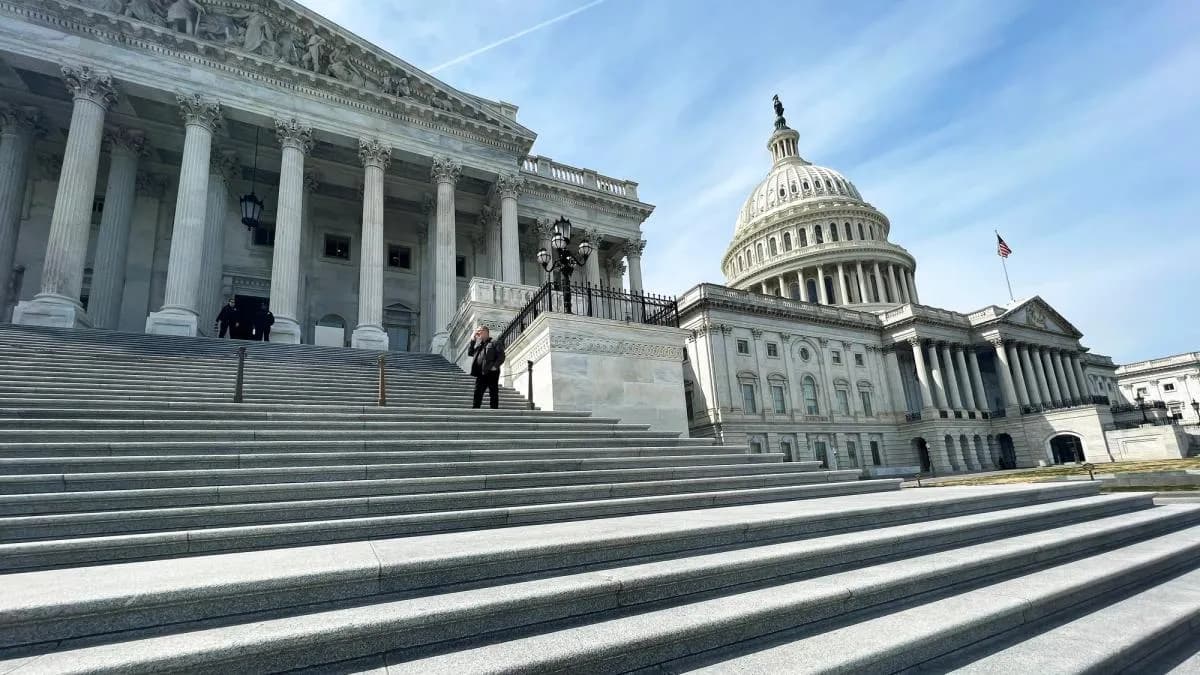
November 2026 saw a "blue wave" in the American elections, with Democrats not only retaking the House of Representatives but also regaining control of the Senate, projected to be at least 54 seats against the remaining 46 Republican ones. This majority extends to the two Senate races still undecided – Mississippi and Alaska – as well as ten House districts yet to be called. With these gains, Democrats are expected to hold more than 253 seats in the House, ensuring legislative dominance for several election cycles.
Political Context Behind the Swing
The electoral shift is part of a trend rejecting former President Donald Trump and his administration, perceived as hostile to several sectors, including decentralized finance. Although the issue of cryptocurrencies was not a decisive factor in the vote, the change of power modifies the institutional framework in which regulators operate. Historically more inclined towards structured regulatory frameworks, Democrats may prioritize tax reforms and potentially develop a new market framework for digital assets.
In the best-case scenario envisioned by industry actors, the newly democratized Congress will focus its investigations on the actions of the outgoing president and his entourage while continuing legislative work that interests crypto enterprises. This means that bodies such as the Securities and Exchange Commission (SEC), the Commodity Futures Trading Commission (CFTC), and the Office of the Comptroller of the Currency (OCC) could continue drafting rules without major interruptions. Such continuity would provide regulatory clarity, even if upcoming norms are stricter than those under the previous administration.
Economic and Tax Implications
The Democratic control of Congress opens the door to in-depth discussions on tax reform, a topic that directly affects crypto actors. An adjustment to the tax treatment of capital gains or mining revenues could alter project profitability. Moreover, the prospect of a "new market framework" suggests the possibility of legislation creating more transparent exchange structures with stricter reporting requirements. These measures, while potentially restrictive, could also reduce legal uncertainty that hinders institutional investments.
Role of Regulatory Authorities in the New Landscape
Regulatory bodies – SEC, CFTC, OCC – are already engaged in rulemaking processes that, according to CoinDesk, are proceeding "without hindrance." For example, the SEC is working on rules regarding initial coin offerings (ICOs) and exchange platforms, while the CFTC is examining the classification of crypto futures contracts. The OCC, meanwhile, is exploring the possibility of allowing banks to offer digital asset custody services. The continuity of these efforts, even under a more regulation-friendly Congress, suggests that industry actors can expect gradual evolution rather than sudden changes.
Possible Scenarios for the Crypto Industry
Two main trajectories emerge. In the optimistic scenario, the Democratic Congress adopts a targeted approach, limiting investigations to the outgoing president's actions while adopting legislative reforms that clarify the legal status of cryptocurrencies, facilitating institutional investor entry. In a more restrictive scenario, Democrats use their majority to impose heavier compliance requirements, such as increased transparency obligations for exchanges and stricter taxation of digital income. In both cases, regulators will continue publishing guidelines, and businesses will need to adapt their operational models to remain compliant.
Markets typically react to signals of regulatory stability. Progressive clarification, even if accompanied by new requirements, tends to reduce the risk premium demanded by institutional investors. Consequently, investment funds, banks, and asset managers may increase their allocations to digital assets, provided rules offer sufficient visibility on reporting and compliance obligations. Conversely, overly restrictive legislation could prompt some actors to reposition themselves outside the U.S., seeking more permissive jurisdictions.
The Weight of Local Elections and State Legislatures
Beyond Congress, election results also influenced state legislatures. Democrats unseated several long-serving senators and won key state legislatures, including Florida, where races for governor and Senate were particularly close. These local victories are crucial because most regulatory frameworks for cryptocurrencies are developed at the state level, notably regarding exchange licenses and taxation. Partisan alignment between the federal level and state governments could lead to rule harmonization, reducing "regulatory arbitrage" between American jurisdictions.
Medium-term Outlook (2027-2028)
The next two legislative years, 2027 and 2028, will be pivotal. With their majorities, Democrats will have room to push legislation that could reshape the crypto landscape. The timing of these initiatives will partly depend on budgetary priorities, particularly the federal deficit and public spending, which will influence Congress's ability to fund new regulatory structures. If the deficit remains high, lawmakers might prioritize revenue-generating tax measures, such as stricter crypto transaction taxation, to offset budgetary needs.
Analytical Conclusion
In summary, the Democrats' victory in the 2026 elections represents not just a political color change but also a reconfigured institutional framework governing cryptocurrencies in the U.S. While continuity in regulatory bodies' work offers some stability, new legislative majorities open the door to potential reforms in both taxation and market structuring. Crypto industry actors must closely monitor legislative developments, adjust compliance strategies, and prepare adaptation scenarios to capitalize on opportunities while managing risks associated with stricter regulation.