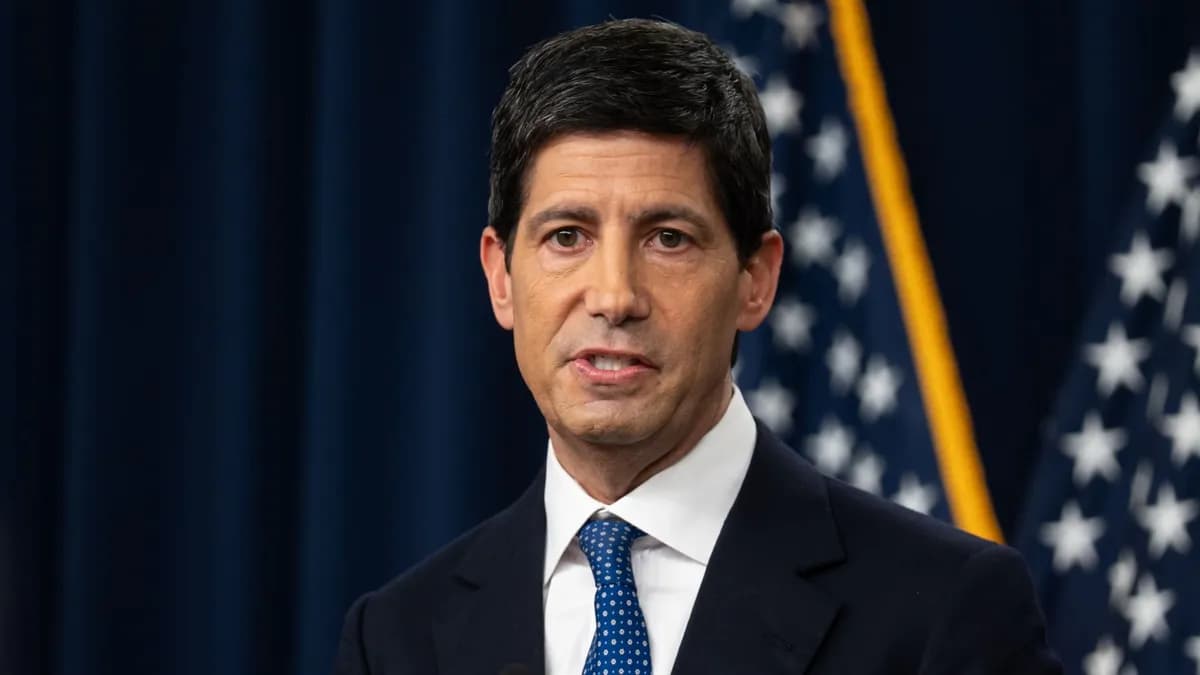
Fed Holds Rates at 3.75‑4%: What Positions for Investors?
The Fed is expected to leave its key rate unchanged between 3.75% and 4% despite signals from Kevin Warsh. Gregory Daco warns against a loss of credibility, while analysts recommend commodities, energy, and defensive stocks for the next quarter.
The U.S. Federal Reserve's decision scheduled for October 30 is expected to leave rates unchanged, with the CME Group FedWatch indicating a roughly 90% probability that the target fed funds range remains between 3.75% and 4%. This expected stability contrasts with the tone of the new Fed Chair, Kevin Warsh, who explicitly rejected traditional forward guidance during the press conference. EY-Parthenon chief economist Gregory Daco emphasized that Warsh must « dispel any impression that the policy decision was political, ahead of the midterm elections », before being forced to justify the pause following September's rate hike and three inflation reports that came in above forecasts. According to Daco, a loss of credibility could trigger a bond market sell-off. The debate unfolds against a backdrop of persistent inflationary data and geopolitical tensions, notably the Iran conflict which is supporting energy prices. (Source : CNBC Finance)
Fed Maintains Its 3.75% to 4% Range
Analyst consensus indicates the Fed will maintain its key rate in the current range, leaving money markets relatively stable. The CME Group FedWatch, which aggregates fed funds futures contracts, shows a 90% probability that the 3.75‑4% range will be maintained, reinforcing expectations of a policy pause after September's hike.
This stability outlook contrasts with Warsh's signals, as he refused to provide clear forward guidance, thereby increasing market participants' sensitivity to upcoming economic data.
Warsh Rejects Traditional Forward Guidance
By stating the Fed will not adopt traditional guidance, Kevin Warsh introduces a new communication dynamic. Gregory Daco reminded that Warsh must « dispel any impression that the policy decision was political, ahead of the midterm elections », at the risk of losing market confidence.
Investors are therefore scrutinizing every nuance of the press conference, anticipating a potential implicit signal that could influence rate expectations for the coming months.
Bond and Equity Markets React to Uncertainty
U.S. Treasuries are already showing increased volatility, with traders fearing a possible sell-off if the Fed's credibility were to be called into question. The spread on 10-year Treasuries has widened by 12 basis points since last week, reflecting investor caution.
On the equity side, the S&P 500 has gained 4% since the start of the month, driven by the energy sector which is outperforming, but valuations remain sensitive to Fed signals.
Investors Bet on Commodities
Liz Thomas, chief market strategist at SoFi, recommends increasing exposure to commodities regardless of the rate scenario. She cites the Invesco Optimum Yield Diversified Commodity Strategy ETF (PDBC), which is up 51% year-to-date with a net expense ratio of 0.59%.
According to Thomas, « I think what you need to do now is get exposure to all scenarios », in order to hedge against a potential inflation rebound or climate disruptions that could support commodity prices.
Energy Sector Outperforms S&P 500 in 2026
Phil Rosen, chief market strategist at Silvia, remains very bullish on oil and energy, citing the sector fund XLE as « an excellent position for the fourth quarter and through 2027 ». He notes that energy demand should climb if artificial intelligence develops as analysts predict.
The energy sector is the top performer in the S&P 500 in 2026, posting a 55% gain year-to-date, while Marathon Petroleum, Valero, Phillips 66, and APA have more than doubled their share prices since the start of the fiscal year.
Defensive Stocks Attract Capitalwize
George Acheampong, founder of Capitalwize, sees an opportunity in defensive sectors, notably healthcare and consumer staples, which offer resilience against rate volatility. He favors companies with « sustainable business models », capable of sustaining their margins even in an economic slowdown.
According to Acheampong, these stocks could offer protection against a potential bond market reversal, while maintaining a stable yield profile for medium-term portfolios.
To track the evolution of the S&P 500 and the sectors mentioned, visit our S&P 500 page. Investors seeking commodity exposure may consider the S&P 500 PEA ETF available on French platforms.