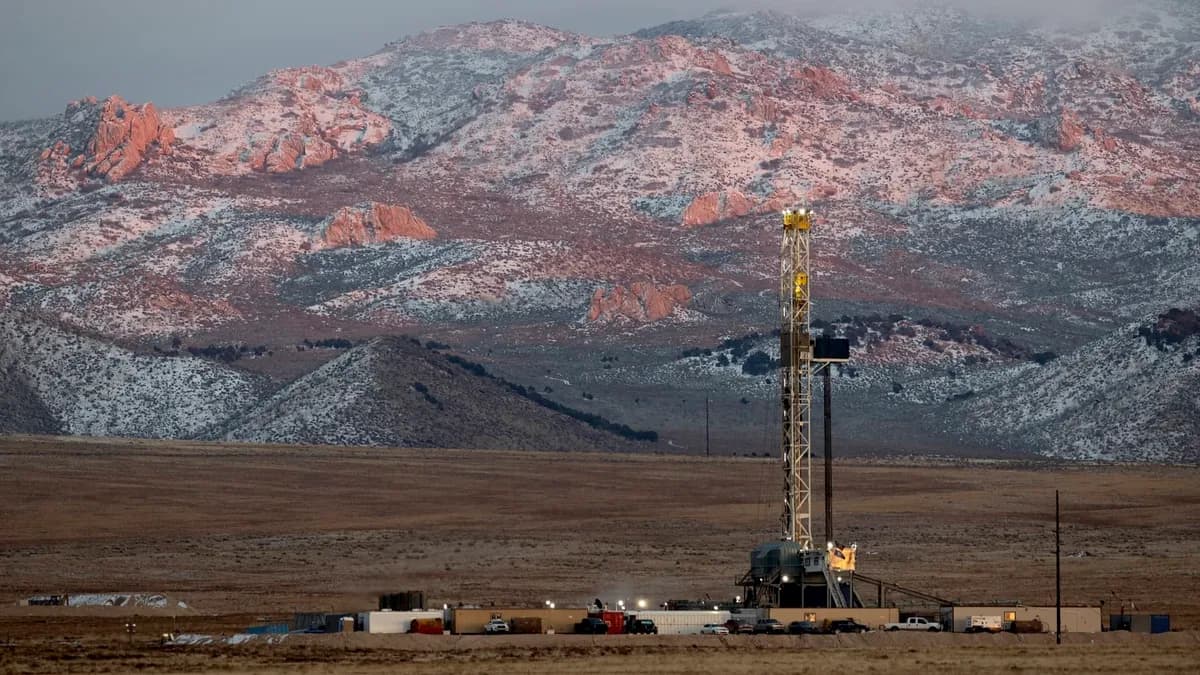
Fervo Energy Launches Its Geothermal Project Cape Station to Meet the Growing Demand of Data Centers
Following its successful initial public offering in May, Fervo Energy is set to bring online the Cape Station project in Utah. This will mark the first commercial enhanced geothermal system in the United States, with a power purchase agreement signed with Google to support the growth of data centers.
Fervo Energy, which went public in May 2026, announced that its Cape Station project in Milford, Utah, is expected to inject electricity into the grid as early as next month, marking the first commercial deployment of an enhanced geothermal system in the United States (source: CNBC).
Cape Station: The First Commercial Enhanced Geothermal System in the United States
The Cape Station site, located in Utah's desert, is in its final stages of construction and is set to begin delivering energy to the national grid as early as next month. This deployment represents a historic milestone for "enhanced geothermal" technology, which combines deep drilling and hydraulic fracturing, techniques inherited from the oil and gas industry. According to CEO Tim Latimer, "It's once in a generation that hyperscalers, utilities, and other customers need energy now, and our energy will play a key role in the electric grid" (source: CNBC).
The project relies on drilling wells into very hot granitic formations, a challenge that traditional geothermal energy players deemed impossible a decade ago. By successfully penetrating these hard rocks, Fervo demonstrates that geothermal energy can be deployed at scale, opening the door to tens of gigawatts of baseload, zero-carbon power generation.
Power Purchase Agreement with Google: A Guarantee of Economic Viability
Fervo Energy recently concluded a power purchase agreement (PPA) with Google, one of the largest consumers of electricity for its data centers. This agreement ensures a stable outlet for Cape Station's production and validates the company's business model. The signing of the PPA was announced shortly after the IPO, reinforcing investor confidence in Fervo's ability to monetize its technology.
Google, seeking to reduce its carbon footprint, chose enhanced geothermal as a reliable and emissions-free energy source. The partnership highlights the convergence between the growing demand for computing power and clean energy solutions, a recurring theme in the sustainability strategies of tech giants.
Going Public: Unlocking Capital for New Investors
Fervo Energy's IPO in May 2026 enabled the company to raise funds essential for financing the development of Cape Station and similar projects. The listing attracted the attention of institutional investors eager to support a technology that could transform the U.S. energy mix.
The success of the IPO also gave the company the visibility needed to negotiate power purchase agreements like the one with Google, while solidifying its access to capital markets for future drilling in other regions of the country.
Rising Electricity Demand: Data Centers as Drivers of the New Energy Wave
In the United States, electricity demand is rising for the first time in decades, largely driven by the explosion of data centers. These facilities, essential to cloud computing and artificial intelligence, consume enormous amounts of energy continuously, creating an urgent need for baseload, zero-carbon power sources.
Tim Latimer emphasizes that "it's a complete transformation compared to 10 years ago, when we were even questioning whether we needed more electricity." Enhanced geothermal, with its ability to provide energy 24/7, precisely meets this need for stability, unlike intermittent renewables like solar or wind.
Acquisition of 600,000 Acres of Geothermal Rights: A Territorial Footprint Strategy
Recognizing the critical importance of geothermal site availability, Fervo Energy has accumulated nearly 600,000 acres of exploration rights across the American West since its inception. This massive acquisition ensures the company a portfolio of potential sites where its deep drilling technology can be applied.
This territorial footprint strategy has been described by the founder as a way to secure the necessary resources to meet future demand while minimizing competition on the most promising lands.
Competitiveness Challenges and Scalability Prospects
Despite technological advancements, Fervo Energy must still prove that enhanced geothermal can be cost-competitive with conventional energy sources. The challenge lies in reducing the costs of drilling and fracturing while maintaining reliable production.
If the Cape Station project succeeds in delivering electricity at a competitive price, it could pave the way for a series of new sites across the United States, transforming geothermal into a major component of the low-carbon energy mix. The next milestone will be the first billing of electricity to Google, which, according to internal company forecasts, marks the transition from demonstration to large-scale commercialization.
Market Outlook: Potential Impact on the S&P 500
The success of Fervo Energy could influence the valuations of clean energy companies listed on the S&P 500, particularly those engaged in carbon-free energy storage and production technologies. Investors will closely monitor the first production figures and margins achieved under the PPA with Google.
Meanwhile, the market will keep a watchful eye on Cape Station's performance reports, which will provide the first concrete data on the profitability of enhanced geothermal at industrial scale.