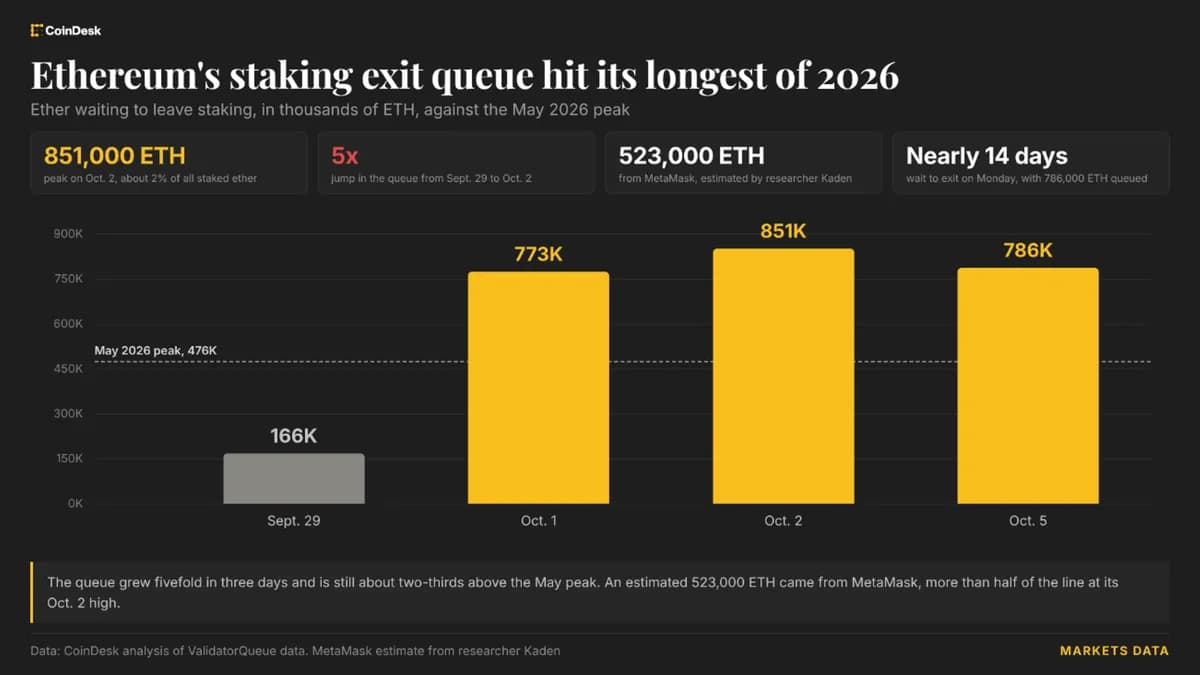
After a security incident at MetaMask, the Ethereum staking exit queue surged to 851,000 ETH ($2+ billion) with an estimated two-week withdrawal delay. The daily constraint of 57,600 ETH creates significant congestion, while Lido plans for gradual restaking over 45 days.
On Monday morning in Asia, approximately 786,000 ETH—valued at over $2 billion at $2,702.82 per ETH—remained in the Ethereum staking exit queue, with an estimated wait time of nearly two weeks, according to a CoinDesk analysis.
Ethereum Exit Queue Hits 851,000 ETH, Reaching 2026 High
Between September 29 and October 2, the amount of ETH in the exit queue jumped more than fivefold, rising from 166,000 ETH to approximately 851,000 ETH, according to CoinDesk data. This surge represents nearly 2% of the 43.6 million ETH currently staked, surpassing the previous peak of 476,000 ETH observed during an earlier wave in May.
The 851,000 ETH peak marks the highest level of the exit queue in 2026, reflecting the impact of a one-time event rather than a structural market trend in staking. The total volume represents over $2.3 billion in value, underscoring the financial stakes for affected ETH holders.
MetaMask Security Incident Sparks Queue Surge
MetaMask, the most-used crypto wallet, announced on September 30 a security incident impacting part of its infrastructure. In response, the company carefully removed the affected validators, fueling the sudden increase in the exit queue.
On October 1, MetaMask clarified that no evidence indicated unauthorized access to user funds or wallets, limiting direct risks for investors. Despite this assurance, the majority of ETH in the queue originated from these rushed withdrawals, according to CoinDesk data.
Protocol Limits Slow Withdrawals: 57,600 ETH Daily Cap
The Ethereum protocol enforces a maximum of 57,600 ETH that can enter or exit staking daily to preserve network stability and security. This constraint naturally creates queues when demand exceeds this threshold.
With a surge of over 685,000 ETH in three days, the exit queue quickly surpassed the daily capacity, resulting in a two-week delay for validators seeking to retrieve their funds.
Impact on Total Staked Volume and New Staking Entries
Parallel to the rise in the exit queue, the number of ETH waiting to enter staking has decreased by over 25% since early September, indicating a contrasting dynamic on the deposit side. This contraction reflects potential hesitancy among participants to commit new funds while withdrawals remain blocked.
The combination of massive exits and reduced entries temporarily alters the staking pool composition, which remains at 43.6 million ETH. The ratio of ETH in exit queues relative to total staked ETH now stands at approximately 2%.
Lido's Response and 45-Day Restaking Plan
Lido, the primary ETH pooling service for staking, indicated that the withdrawn ETH will be gradually restaked over 45 days. This approach aims to minimize network security impact while providing an orderly exit for validators.
According to security expert Kaden's estimates, the precautionary exits involved around 17,000 validators holding 523,000 ETH, though MetaMask has not confirmed these figures. Lido therefore plans to reinject these funds in a staggered manner, easing pressure on the exit queue.
Implications for Validators and Network Stability
The daily limit of 57,600 ETH aims to prevent drastic fluctuations that could compromise consensus security. However, during a mass exit event, the system exposes validators to longer fund recovery times, which may influence their future participation decisions.
Despite this temporary slowdown, the Ethereum network maintains its security level thanks to these safeguards, as noted by CoinDesk. The current situation thus serves as a resilience test for the protocol in the face of operational shocks.