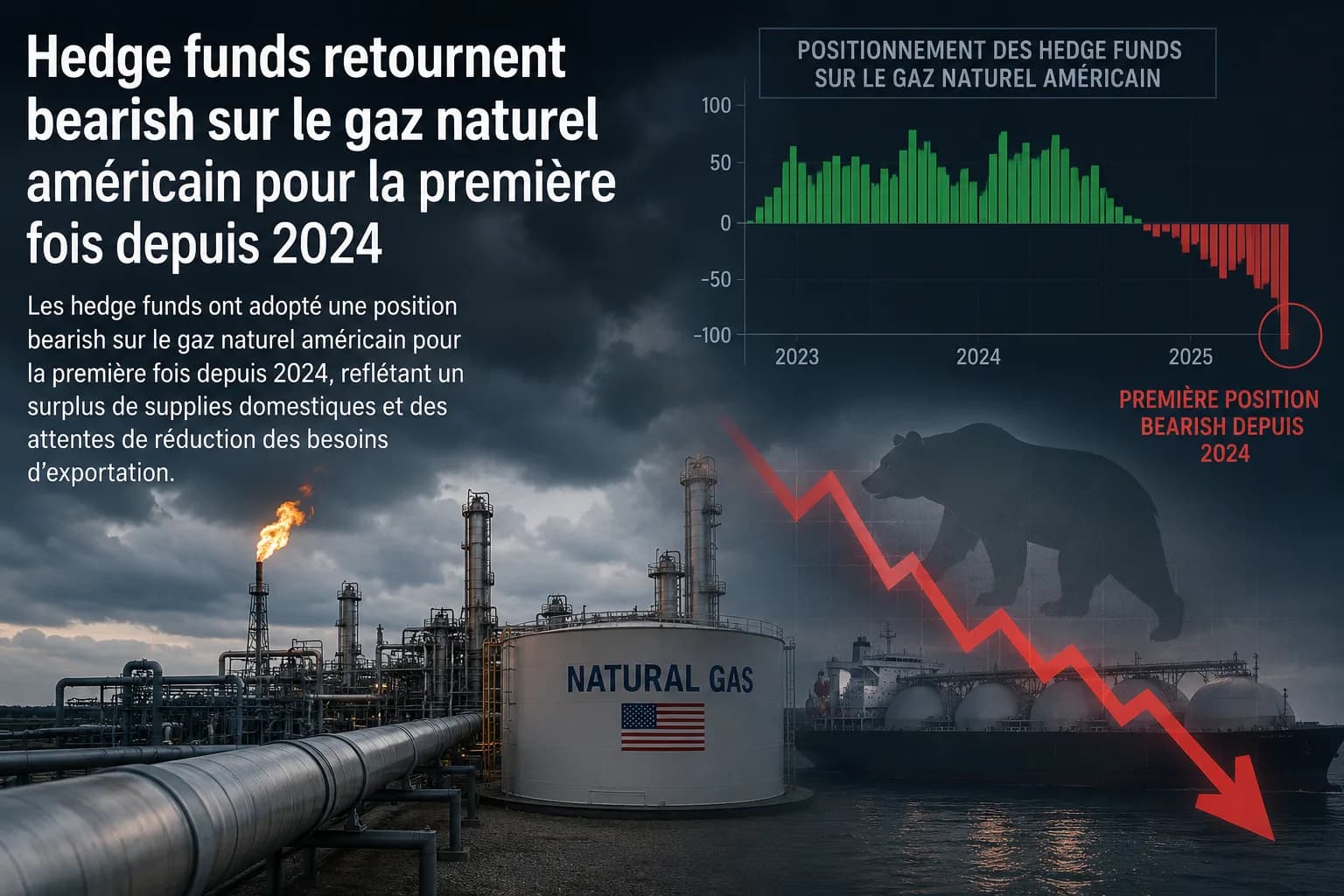
Hedge Funds Turn Bearish on US Natural Gas for the First Time Since 2024
Hedge funds have adopted a bearish stance on US natural gas for the first time since 2024, reflecting an abundance of domestic supply and expectations of reduced export needs.
Hedge Funds Turn Bearish on US Natural Gas for the First Time Since 2024
Hedge funds have adopted a bearish stance on US natural gas for the first time since 2024, marking a significant shift in natural gas supply dynamics in the United States. This change in sentiment among institutional investors follows a period of rising prices and reflects an environment of abundant domestic resources and reduced export needs.
Context: Abundance of Resources and Reduced Exports
The abundance of natural gas resources in the United States has been a key factor in this shift. Exports have also declined, further bolstering domestic supply. This has led hedge funds to reassess their positions in the US natural gas market.
US natural gas benefits from record production thanks to innovative extraction techniques such as hydraulic fracturing and vertical fracking. These methods have unlocked previously inaccessible reserves, significantly increasing the domestic supply.
Alongside increased production, recent liquefied natural gas (LNG) exports have also seen a decrease. This can be attributed to a global landscape where other major producers like Russia and Saudi Arabia have ramped up their exports, thereby limiting the need for US LNG exports.
Impact on Energy Markets
The hedge fund shift has directly impacted natural gas prices, with a decline observed as supply outpaces demand. Investors should monitor this trend for fossil fuel-exposed portfolios.
The natural gas market is a price-driven marketplace, with costs determined by supply and demand. Hedge funds, significant players in this market, influence prices by adjusting their long or short positions. A bearish position indicates these funds expect price declines and will position themselves to profit from a potential downturn.
The decline in natural gas prices has broader economic implications. Consumers may benefit from lower energy costs, while energy-intensive industries could see reduced expenses. However, natural gas producers might face revenue shortfalls, potentially impacting their ability to invest in new production or maintain existing infrastructure.
Price Evolution Scenarios
Analysts predict that natural gas prices will remain under pressure in the short term due to abundant supply. However, factors like weather conditions could influence this trend moving forward.
Weather plays a crucial role in natural gas demand, particularly during periods of extreme cold or heat. For instance, an unusually harsh winter could lead to increased residential and industrial consumption, reducing available supply and potentially driving up prices.
Additionally, natural gas stock levels are a key determinant of price trends. Excess inventory can contribute to price drops, while low stocks may lead to price increases. Regularly published data on stock levels are closely monitored by investors to assess pricing前景s.
Consequences for Energy Assets
This shift could impact the US energy sector, with production and distribution companies adjusting strategies in response to changing market conditions.
Oil and gas companies might reduce investments in natural gas production if prices remain depressed. This could manifest as job cuts, delayed investments, or industry consolidation. Energy service companies, such as equipment manufacturers and technology providers, could also be affected if demand for their products and services declines.
Financial market impacts could also be felt. Shares of oil and gas companies might suffer if profit forecasts are downgraded. Additionally, speculative funds and hedge funds that have already adopted a bearish position could see profits rise if prices continue to fall.
Economic Factors Analysis
The current situation in the natural gas market is the result of a delicate balance between supply and demand. Abundant domestic resources have reduced US reliance on imports, enhancing energy security.
Hedge funds, as key players in the financial markets, conduct in-depth analyses of economic data and trends to anticipate price movements. Their bearish stance reflects a thorough evaluation of current data and future projections.
US natural gas production has been transformed by the shale gas revolution, which has not only increased national reserves but also reduced production costs. This technological innovation has enabled producers to compete with traditional exporters on the global stage.
Economics of the Natural Gas Market
The natural gas market is characterized by volatile prices influenced by a variety of factors, including weather conditions, fluctuations in demand, and changes in supply. Hedge funds play a crucial role in this volatility by taking speculative positions that can amplify price movements.
Future contracts and options are popular instruments used by hedge funds to position themselves in the natural gas market. These instruments allow investors to expose themselves to price variations without necessarily holding the underlying asset.
The participation of hedge funds in this market underscores the growing importance of institutional capital in energy markets. This can lead to increased liquidity but may also result in heightened speculation.
Political Context Review
This shift in hedge fund positions also occurs against a political backdrop where the United States has strengthened its energy independence. This independence is partly due to domestic natural gas production, which has enabled the country to reduce imports and position itself as a major exporter.
Government policies aimed at promoting resource exploitation have also played a role in this situation. Tax incentives and favorable regulations have encouraged businesses to invest in natural gas production.
Conclusion
The about-face of hedge funds on US natural gas reflects a changing perception of the energy market in the United States. While abundant resources and reduced exports have been key drivers of this shift, investors must consider the numerous factors influencing natural gas prices.
As prices remain under pressure in the short term, factors such as weather conditions and natural gas inventory levels could still influence future trends. Energy industry players must therefore remain vigilant and adapt to market changes.