

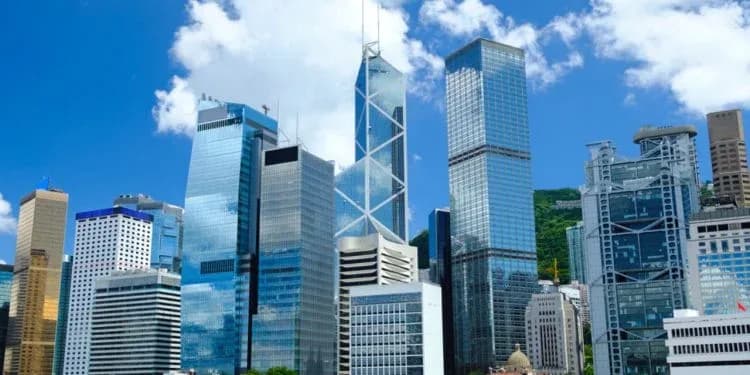
The Hong Kong Monetary Authority (HKMA) has stated that it has implemented guidelines for the territory's banks, aiming to strengthen security and transparency in the management of client accounts. This decision comes in a context where financial regulation is becoming increasingly strict, particularly with regards to the fight against tax evasion and money laundering.
These new rules are inspired by those applicable to brokers in relation to the management of Chinese mainland clients' accounts, according to Bloomberg. It is important to note that the Chinese mainland is a crucial market for many financial institutions, and that managing its client accounts requires particular attention due to the regulatory and legal differences between the Chinese mainland and Hong Kong.
The purpose of these guidelines is to prevent tax evasion and money laundering activities, and to ensure that banks operate in a transparent and responsible manner. Financial transparency is a key element in preventing these illegal activities, as it allows authorities to more effectively monitor capital flows and identify suspicious transactions.
The HKMA has indicated that these guidelines will apply to all banks operating in Hong Kong, including banks and financial institutions. This means that all financial institutions managing client accounts in Hong Kong will have to comply with these new rules, which could impact their way of operating and the costs associated with managing these accounts.
The implementation of these guidelines is an important step towards transparency and accountability in Hong Kong's financial sector. Financial transparency is essential for maintaining investor and client confidence in the financial system, and for preventing financial crises. By strengthening regulation and supervision, the HKMA aims to protect the integrity of Hong Kong's financial system and make it more attractive to foreign investors.
Analysts estimate that these guidelines will contribute to strengthening the international financial community's confidence in Hong Kong's financial system. Confidence is a key element in financial markets, as it influences investors' decisions to invest their capital in one market or another. By improving transparency and regulation, Hong Kong can strengthen its attractiveness to foreign investors and consolidate its position as an international financial center.
The HKMA has emphasized the importance of cooperation between banks and regulatory authorities to implement these guidelines effectively. Cooperation is essential for the new rules to be applied uniformly and effectively, and for banks to be able to comply with regulatory requirements. This requires clear and regular communication between banks, the HKMA, and other relevant authorities.
Banks that do not comply with these guidelines risk facing sanctions and disciplinary measures, according to the HKMA. Sanctions may include fines, penalties, and in the most severe cases, the revocation of operating licenses. This highlights the importance for banks to take these new rules seriously and to put in place the necessary measures to comply with regulatory requirements.
It is important to note that the implementation of these guidelines will not be without challenges. Banks may need to adapt their systems and processes to comply with the new rules, which could require significant investments in terms of time, resources, and technology. However, these efforts should in the long term contribute to strengthening the stability and confidence in Hong Kong's financial system.
Financial regulation is a constantly evolving field, with new threats and challenges emerging regularly. The fight against tax evasion and money laundering is an example of these challenges, and regulatory authorities must be vigilant and proactive to address them. The implementation of these guidelines by the HKMA is a step in this direction, and demonstrates Hong Kong's determination to maintain its status as a secure and transparent financial center.
The economic and political context in which these guidelines are being implemented is complex. The global economy is facing numerous challenges, including slow growth, income inequality, and geopolitical risks. In this context, stability and confidence in financial markets are more important than ever. The HKMA's efforts to strengthen regulation and transparency contribute to this stability and confidence, and are essential for Hong Kong's long-term economic development.
Finally, it is clear that the implementation of these guidelines will have implications for both banks and clients. Banks will need to adapt their practices and systems to comply with the new rules, which could impact the costs and services offered to clients. Clients, on the other hand, should benefit from a more secure and transparent financial environment, which strengthens confidence in the financial system and facilitates economic transactions.