Hong Kong Urges Banks to Use AI to Track Crypto Money Laundering Before Funds Disappear
Hong Kong encourages banks to adopt artificial intelligence to detect suspicious financial transactions, including stablecoins, which represent 84% of illicit crypto transfers.
Hong Kong Wants Banks to Use AI to Track Crypto Money Laundering
Hong Kong encourages banks to adopt artificial intelligence to detect suspicious financial transactions, including stablecoins, which represent 84% of illicit crypto transfers. This initiative is part of a broader effort by Hong Kong's monetary authorities to maintain the reputation of its financial system, already ranked among the most open and regulated in Asia. The rise of digital assets has created new value transfer channels, often faster and less traceable than traditional ones, prompting regulators to rethink their surveillance tools.
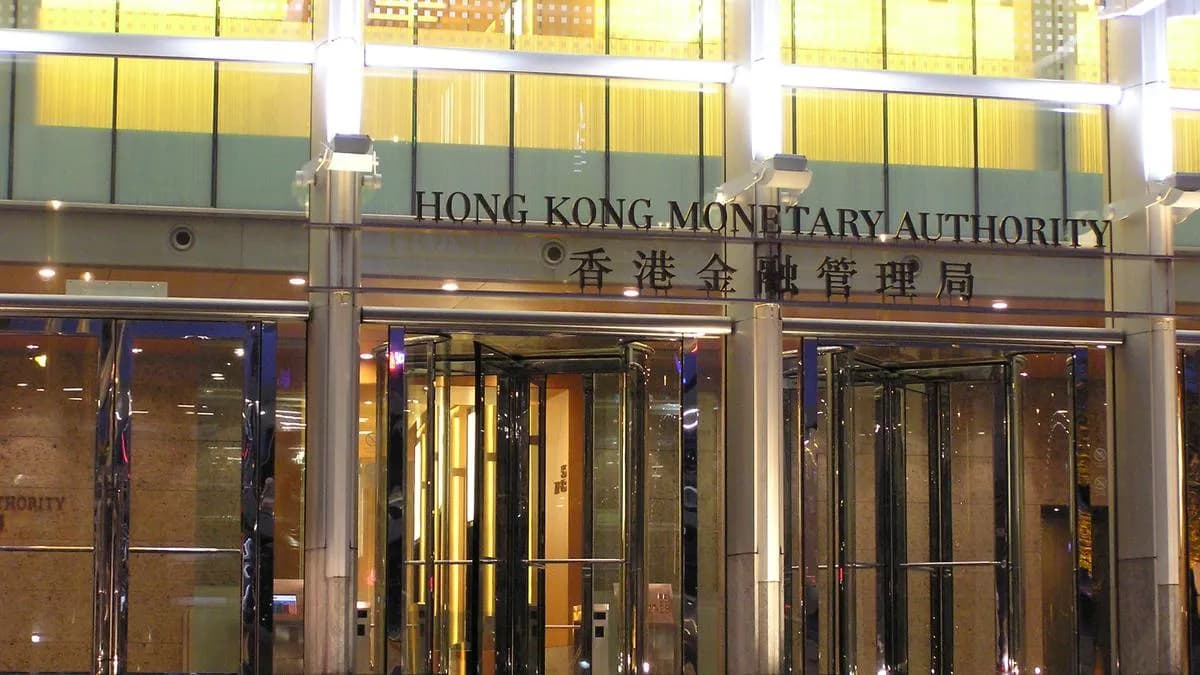
The report published on Tuesday by the Hong Kong Institute for Monetary Research, which groups analysts from the Hong Kong Monetary Authority (HKMA), shows that the central bank is accelerating its efforts to encourage banks to integrate AI into their anti-money laundering (AML) processes. The goal is twofold: to improve the capacity to detect illicit cash flows and to reduce the reaction time between detecting an anomaly and potentially freezing funds to prevent rapid dissipation of dirty money.
AI Must Detect Suspicious Transactions Without Compromising Client Funds
Raymond Chan, executive director in charge of law enforcement and AML at the Hong Kong Monetary Authority, explained that the institution is examining how AI agents could combine blockchain data with client records held by banks. This dual information source would allow, in real time, a link to be established between a wallet address and the legal identity of the bank account holder. The main challenge, according to Chan, is to make this connection "fast enough to prevent the dissipation of funds," which implies large-scale processing capabilities and algorithms able to filter the noise generated by millions of daily transactions.
Chan cited a study by Chainalysis, the global leader in blockchain analysis, indicating that illicit crypto addresses received at least $154 billion in 2025, a 162% increase from the previous year. This explosion is largely due to the massive use of stablecoins, which represent 84% of the total illicit flows. Despite this impressive volume, Chainalysis estimates that illicit activity does not exceed 1% of the total volume of crypto transactions, indicating that the majority of the market remains legitimate but authorities must focus on a small segment with very high impact.
The underlying economic mechanism explains why stablecoins are preferred by malicious actors: they offer the stability of a fiat asset while retaining the speed and pseudonymous nature of blockchain. An illicit fund can thus be converted into stablecoin, transferred across multiple platforms, and then reconverted into fiat currency via a bank account, all within minutes. Without an AI system capable of tracking these inter-asset conversions, banks risk never identifying the true source of funds.
Banks Must Test AI Agents Before Using Them Independently
Abdul Rafay Gadit, co-founder of ZIG Finance, stressed that banks should first test AI agents against past fraud cases and run them in parallel with existing surveillance systems before letting them act autonomously. He recommends a comparative approach: measuring the number of alerts generated, the false positive rate, the average investigation time, and the tool's ability to detect patterns that traditional systems might have missed. "Fewer alerts are useless if detecting suspicious activities decreases," he added.
Gadit also points out that AI agents can accomplish several tasks with limited human surveillance, but the final decision - freezing an account, rejecting a payment, or filing a suspicious activity report - should remain with a qualified employee. This dual control aims to avoid classification errors that could result in the unjustified freezing of legitimate funds, a particularly sensitive risk in a financial hub where client trust is crucial.
The Regulatory Framework and Compliance Requirements
The HKMA has published, over the past six months, a series of guidelines specifying compliance requirements for using AI in the AML domain. These directives require that machine learning models be transparent, auditable, and subject to periodic validation. Banks must document the data sources used (blockchain transactions, KYC/KYB records, sanctions lists) and demonstrate that their algorithms comply with non-discrimination and privacy protection principles. In practice, this means that each AI-generated alert must be accompanied by a clear explanation of the algorithmic reasoning, allowing compliance personnel to evaluate the relevance of the action to be taken.
Moreover, the HKMA is collaborating with external blockchain analysis providers like Chainalysis to enrich internal databases with intelligence on suspicious addresses. This public-private cooperation aims to create a common reference that accelerates the correlation between on-chain addresses and real entities, reducing the time spent researching links between wallets and clients.
Technical Challenges in Linking Blockchain-IDENTITY
The main technical challenge lies in the pseudonymous nature of blockchain. Although each transaction is immutable and publicly visible, a wallet identifier does not directly reveal the owner's identity. The solutions considered combine graph-analysis techniques, which identify transfer patterns between addresses, with KYC databases held by banks. AI must therefore be capable of ingesting heterogeneous data streams: structured data (sanctions lists, KYC profiles) and unstructured data (transaction metadata, forum comments).
Another challenge is managing volume. In 2025, the number of stablecoin transactions surpassed 10 billion, generating several terabytes of daily data. AI models must be optimized to function in real-time, implying the use of distributed computing technologies and low-latency data pipelines. The HKMA encourages banks to exploit hybrid cloud architectures, allowing them to keep sensitive data internally while leveraging external computing power for intensive analyses.
Implications for Hong Kong Financial Institutions
For local banks, adopting AI represents both an opportunity and a constraint. On the one hand, AI tools can reduce false positives, freeing up time for compliance teams and decreasing operational costs associated with manual investigations. On the other hand, complying with the HKMA's new requirements necessitates significant investments in technological infrastructure, personnel training, and AI model governance.
Banks that successfully integrate these systems seamlessly will be able to offer their clients better fraud protection, strengthen their reputation as reliable 'gatekeepers,' and ultimately attract more digital capital flows. Conversely, those that lag behind in compliance risk being penalized or even excluded from certain cross-border payment services, as international partners increasingly demand AI-based AML standards.
Outlook for the Evolution of Anti-Crypto Crime Efforts in Hong Kong
Over the next few months, we can expect to see prototype AI agents being tested that can perform end-to-end analyses, from receiving a stablecoin payment to its cashing out in fiat currency. These prototypes will be tested in controlled environments where banks can compare the performance of supervised models (based on historical datasets) with unsupervised models capable of detecting never-before-seen anomalous behaviors.
Finally, the HKMA plans to expand the scope of AI beyond just AML, integrating functions for detecting terrorist financing (CTF) and economic sanctions compliance. This evolution reflects Hong Kong's desire to remain at the forefront of digital asset regulation while protecting its financial system from the growing risks associated with the speed and opacity of crypto transactions.