Moody's, the Financial Intelligence of Berkshire Hathaway
For two decades, Moody's has been a flagship holding in Berkshire Hathaway's portfolio, despite market fluctuations and economic uncertainties. Dive into a solid investment.
Moody's: A Safe Bet in Berkshire Hathaway's Portfolio
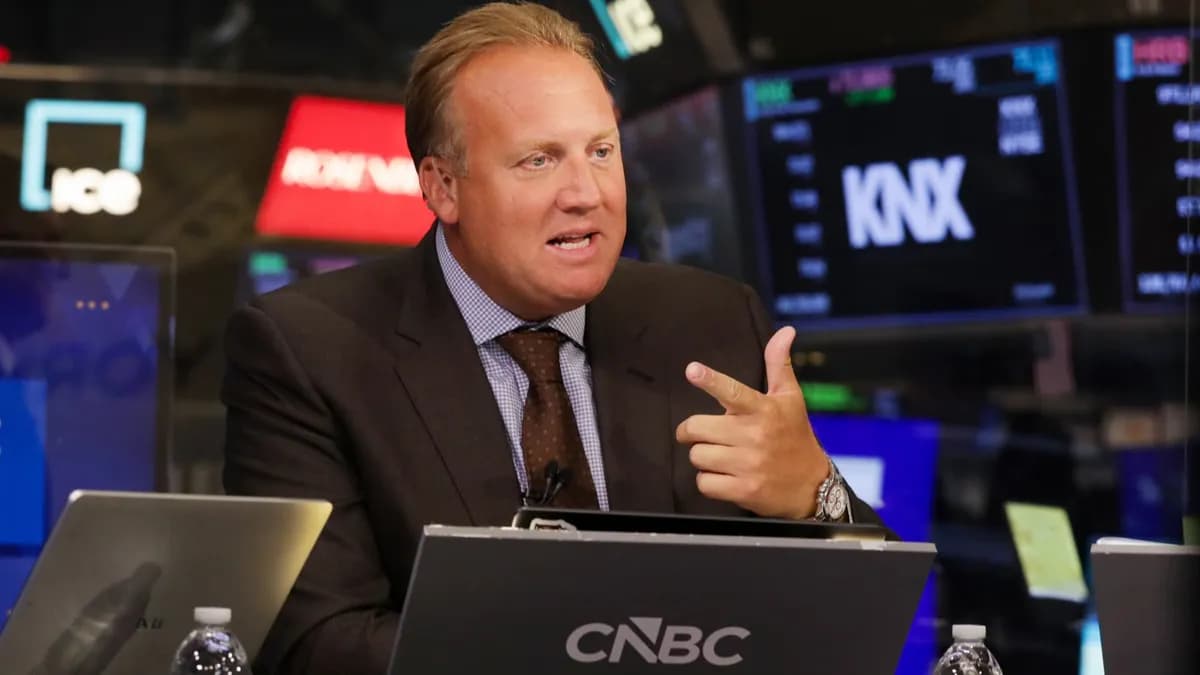
Moody's Corporation, the credit rating and financial services company, holds a unique place in the portfolio of one of the world's largest investors, Berkshire Hathaway. This presence, spanning over twenty years, was highlighted by Josh Brown and Sean Russo of Ritholtz Wealth Management in a CNBC Finance article. The two analysts noted that despite market fluctuations and macroeconomic uncertainties, Moody's retains the attributes of a solid investment, capable of generating regular returns and resisting economic cycles.
A Resilient Enterprise Facing Market Challenges
Moody's has weathered several periods of turbulence, including the 2008-2009 financial crisis, which tested the credibility of rating agencies. Instead of suffering permanent erosion, the company strengthened its rating processes, improved methodology transparency, and diversified revenue sources. Today, Moody's offers more than just credit ratings; it provides risk analyses, financial databases, and decision intelligence solutions for banks, insurers, and asset managers. This diversification has stabilized cash flows even when bond markets experience sudden movements.
Moody's credit ratings play a central role in the global financial system's functioning. A high rating reduces an issuer's borrowing costs as investors perceive lower risk and demand lower yields. Conversely, a downgrade increases interest rates, potentially raising debt servicing costs for governments and businesses. By evaluating issuers' solvency, Moody's directly influences yield spreads, asset allocation decisions, and perceptions of sovereign or corporate risk. This influence grants the company a strategic position, translating into constant demand for its services even during volatility.
Bond Market Mechanics and Rating Impact
When investors anticipate a deterioration in an issuer's financial health, they often react by selling affected securities, pushing yields higher. Moody's ratings serve as objective benchmarks in this price discovery process. For example, if Moody's downgrades a sovereign nation, investors adjust their portfolios by increasing yield requirements, immediately reflected in bond prices. Conversely, an upgrade can trigger a rebound in bond prices as capital flows towards perceived safer assets. Thus, Moody's ability to provide rapid and reliable evaluations serves as a market stabilization lever.
Moody's stock experienced a strong correction last year. According to the CNBC article, the stock fell over 19% by mid-February, reaching a trough of around $402 before stabilizing for several months within a wide range. This slowdown coincided with a wave of sales triggered by the emergence of artificial intelligence, which quickly challenged the business models of data and analytics providers like Moody's and MSCI. Despite this context, Berkshire Hathaway did not panic; instead, it maintained its investment, allowing the company to benefit from the stock's recovery when it resumed its upward trajectory. This dynamic illustrates Josh Brown's principle of 'flinching'; investors who overreact to tech news may miss long-term value opportunities.
Berkshire Hathaway's Investment Strategy Applied to Moody's
Warren Buffett has always favored a patient, fundamental understanding-based investment approach focused on generating recurring cash flows. Moody's meets these criteria through its recurring subscription model, stable revenues from long-term contracts, and the high barrier to entry represented by its globally recognized credit rating credibility. Additionally, Moody's indispensable role in financing businesses and states creates an economic 'moat,' a term Buffett uses to denote durable competitive advantages. By holding its shares for over two decades, Berkshire has capitalized on Moody's organic growth while gaining exposure to a resilient sector during recession cycles.
Political and Regulatory Context Around Credit Rating Agencies
Credit rating agencies like Moody's operate under the supervision of regulators such as the Securities and Exchange Commission (SEC) in the US and the European Securities and Markets Authority (ESMA) in Europe. Post-2008 crisis reforms strengthened transparency requirements, imposed separations between rating activities and advisory services, and mandated conflict-of-interest disclosure. These measures restored investor confidence and legitimized agencies' role in stabilizing the credit market. Moody's adapted its practices in compliance with these requirements, reinforcing its credibility and perceived stock value.
The Weight of Data and Analytics in Moody's Growth Strategy
Beyond traditional ratings, Moody's has developed a data and analytics offering critical for financial institutions. Risk Management Solutions (RMS) and Moody's Analytics provide forecasting models, stress test scenarios, and credit risk management tools. These solutions enable banks to evaluate default probabilities, insurers to price products, and asset managers to optimize portfolios. The recurring nature of these services, often based on annual contracts, creates stable revenue streams that smooth bond market fluctuations. Josh Brown highlighted this diversification as a key factor in Moody's resilience against technological headwinds.
Moody's: A Major Player in Financial Intelligence
Moody's plays a crucial role in the international financial system. As a credit rating agency, it evaluates debt issuers' solvency, enabling investors to make informed decisions. Moody's ratings are used by investors to assess the credit risk associated with government and corporate bonds. The company also offers financial analysis and data services, essential for banks and insurers in their decision-making processes. Moody's analysis tools help these financial actors measure credit risk, manage portfolios, and make strategic decisions.
In conclusion, Moody's Corporation is a solid and resilient enterprise that has earned the trust of a savvy investor like Warren Buffett. Its place in Berkshire Hathaway's portfolio for two decades is a testament to its financial solidity and investment potential. Moody's continues to play a key role in the international financial system through its rigorous credit evaluations and powerful financial analysis tools.