Moscow Exchange launches Bitcoin, Ether and USDT trading on December 1
Russia's main exchange opens the Bitcoin, Ether and USDT stablecoin market on December 1, despite U.S. sanctions weighing on the exchange and its clearing center. Retail investors will be limited to 300,000 rubles per year, while flows could reach 4 trillion rubles in the first year.
Moscow Exchange, Russia's main exchange, announced it will open trading in three major crypto-assets – Bitcoin, Ether and Tether's USDT stablecoin – on December 1, despite the exchange and its clearing center being on the U.S. sanctions list since June 2024. This decision fits into a broader Kremlin strategy aimed at reducing the country's reliance on offshore platforms while maintaining state control over digital financial flows.
Moscow Exchange launches Bitcoin, Ether and USDT trading starting December 1
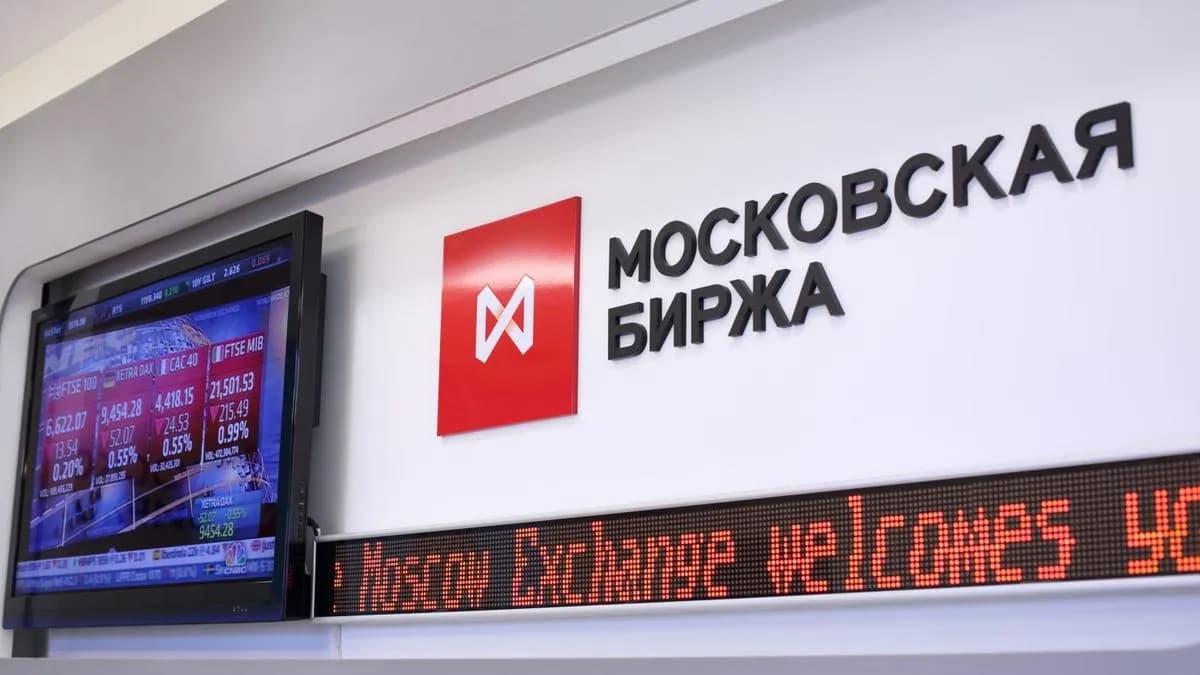
The plan provides that transactions will be settled by the National Clearing Centre, an entity also under sanctions, and that prices will be displayed on the same screens as Sberbank and Gazprom shares. By integrating crypto-assets into traditional quotation systems, MOEX seeks to normalize their accounting treatment and offer market participants real-time visibility comparable to that of traditional exchange-traded securities. This dual dissemination – equities and cryptocurrencies – should facilitate portfolio diversification for institutional investors who, until now, had to rely on foreign brokers to access crypto markets.
The choice of Bitcoin, Ether and USDT is not arbitrary. Bitcoin and Ether represent the sector's two largest market capitalizations, ensuring sufficient liquidity to absorb expected volumes. USDT, as a dollar-backed stablecoin, offers a less volatile entry point for Russian traders who want to avoid currency fluctuations while remaining exposed to crypto market movements.
Limited access for retail investors: aptitude test and 300,000 ruble cap
Individual investors will have to pass an aptitude test before accessing the service, and their annual purchases will be capped at 300,000 rubles, or about $3,700, via a single broker. The test typically covers knowledge of crypto-asset risks, understanding of settlement mechanisms, and the ability to identify fraud or market manipulation signals. The aim is to limit small savers' exposure to notoriously volatile assets while complying with requirements imposed by the Russian regulator.
Qualified investors, as defined by Russian authorities, will face no volume limits, opening the door to potentially large flows from the first months of operation. This distinction creates a dual market structure where institutional players can operate at scale while retail investors remain constrained by strict thresholds, a model reminiscent of traditional derivatives market regulatory frameworks.
A sanctioned framework: MOEX and the National Clearing Centre under U.S. sanctions
The U.S. Treasury blocked Moscow Exchange and the National Clearing Centre in June 2024, while issuing wind-down licenses for existing relationships. These "wind-down" licenses allow already-engaged counterparties to close out their positions, but do not authorize new transactions. Thus, MOEX's announcement constitutes a test of the scope of these licenses, since the new crypto-trading operations will be directly linked to a clearing center still under sanctions.
The main question mark concerns Tether's wallet-freezing policy. Tether has stated that it blocks addresses associated with U.S. Treasury sanctions lists. If a USDT wallet transiting through the National Clearing Centre were identified as sanctioned, Tether could theoretically freeze the funds, creating a legal conflict between U.S. compliance obligations and MOEX's operational requirements. This situation has not yet been clarified, and market participants are closely monitoring Tether's official responses.
Volume forecasts: up to 4 trillion rubles in the first year
Deputy CEO Anatoly Popov indicated that trading volume under the new regime could reach 4 trillion rubles, or nearly $49 billion, in the first year. This estimate rests on several assumptions: the migration of a significant share of crypto flows currently processed on offshore platforms to MOEX, the National Clearing Centre's capacity to handle high volumes through "same-day" or "next-day" settlement mechanisms, and the attraction of new institutional investors thanks to the enhanced visibility provided by exchange-screen quotation.
By comparison, lawmaker Ivan Chebeskov had estimated the Russian crypto market's daily turnover at 50 billion rubles, of which 11 billion come from Sberbank transactions. Extrapolating these figures, the annual volume estimated by Popov represents a more than tenfold increase over current daily traffic, underscoring the government's ambition to create a national crypto hub capable of competing with foreign financial centers.
It should also be noted that the 300,000 ruble cap for retail investors, applied to their total annual purchases, limits the direct contribution of small savings to total volume. Thus, the bulk of the 4 trillion figure will have to come from qualified investors and institutions, implying a mobilization of significant capital and the establishment of robust risk management structures.
Trading hours and clearing mechanisms aligned with the equity market
Trading will take place from 06:50 to 23:50 Moscow time, exactly the same hours as Russian stock market sessions, thereby facilitating multi-asset portfolio management for participants. This synchronization allows players to hedge their crypto positions with traditional instruments (equities, bonds) in real time, reducing the need to resort to separate trading platforms and limiting currency conversion costs.
Settlement will occur same-day or next-day, with swaps available to absorb liquidity imbalances. As derivative instruments, swaps offer the possibility of transferring liquidity risk from the market-maker to a counterparty willing to provide capital during periods of high volatility. This mechanism is crucial for a nascent market, as it ensures operational continuity even when buy and sell orders do not balance instantaneously.
By integrating these clearing mechanisms into the National Clearing Centre's existing infrastructure, MOEX benefits from an already proven post-trade chain, including margin management, position tracking and counterparty guarantee. This reduces operational costs and bolsters institutional investors' confidence, as they demand security and transparency standards comparable to those of traditional financial markets.