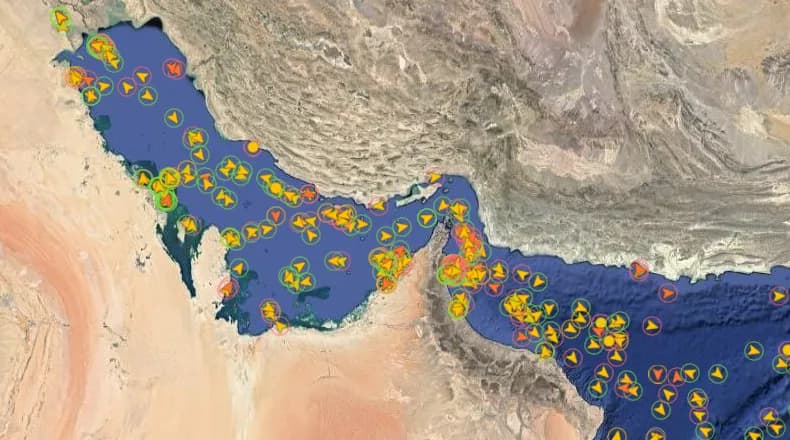
Rubio Announces 'Good News' on the Strait of Hormuz
US Secretary of State Marco Rubio has announced 'good news' regarding the Strait of Hormuz, which has been blocked for weeks, as negotiations between Iran and Washington continue.
US Secretary of State Marco Rubio has announced 'good news' regarding the Strait of Hormuz, which has been blocked for weeks, as negotiations between Iran and Washington continue.
Tensions have increased in recent weeks, with significant disruptions to energy markets, particularly oil.
According to Rubio, there is 'a possibility that we will have some good news in the coming hours'.
The Strait of Hormuz, a symbol of tensions between Iran and the West
The Strait of Hormuz, which separates Iran from Saudi Arabia, is a strategic passage for oil transportation between Iran and the West. For several weeks, tensions between Iran and the West have increased, with significant disruptions to energy markets.
The United States and the European Union have imposed sanctions on Iran, particularly for its nuclear activities, which has led to an escalation of tensions.
Negotiations between Iran and Washington to get out of the impasse
Negotiations between Iran and Washington began a few months ago, but they stopped in the middle of this year.
US President Donald Trump announced that the United States is ready to resume negotiations with Iran, but the conditions remain unclear.
Impact for the French investor
Tensions between Iran and the West have a direct impact on energy markets, particularly oil. French investors should closely monitor the situation and take diversification measures to minimize risks.
The actions of oil companies like TotalEnergies (TTE) and Engie (ENGI) could be affected by disruptions to energy markets. Investors could also consider actions of companies that are not directly affected by tensions between Iran and the West, such as financial services or technology companies.
An example of a diversification strategy could be to distribute investments between oil company stocks, such as TotalEnergies or Engie, and financial services company stocks, such as BNP Paribas (BNP) or Société Générale (GLE).
Investors could also consider investment funds that have limited exposure to energy markets, such as European equity funds that have an allocation of less than 20% to oil company stocks.
For example, the European equity fund of BNP Paribas has an allocation of less than 10% to oil company stocks.
In addition, investors could also consider risk management strategies, such as volatility management or sustainability management. These strategies can help minimize risks and maximize returns in a volatile market environment.
For example, investors could consider investing in ETFs that track oil prices, such as the WTI Crude Oil ETF (DBC) or the Brent Oil ETF (OIL). These ETFs can help investors manage their exposure to the oil market and minimize risks.
Investors could also consider investing in PEA that have limited exposure to energy markets, such as BNP Paribas or Société Générale PEA. These PEA can help investors diversify their portfolio and minimize risks.
Finally, investors could also consider consulting a financial advisor or wealth manager to obtain personalized advice tailored to their needs and objectives.
Historical context
Situations similar to the current tensions between Iran and the West have occurred in the past, particularly during the Iran-Iraq war in the 1980s. At the time, tensions between Iran and Iraq led to a loss of confidence in energy markets and an increase in oil prices.
However, it is essential to note that current conditions are different from those of the Iran-Iraq war. The negotiations between Iran and Washington are a key factor that could influence energy markets, and investors should take into account the differences between the current situation and past situations.
In addition, investors should also consider the geopolitical factors at play, such as the presence of US military forces in the region and the relationship between Iran and European countries.
Comparative data
Comparative data between recent months and previous months show an increase in oil prices due to tensions between Iran and the West. According to Bloomberg data, the price of a barrel of WTI oil has increased by 10% on average over the last twelve months.
Bloomberg data also show that the actions of oil companies like TotalEnergies and Engie have suffered a loss of 15% on average over the last twelve months due to disruptions to energy markets.
Conclusion
Tensions between Iran and the West remain a source of concern for French investors. Investors should take diversification measures to minimize risks and closely monitor the situation.
The 'good news' announced by Rubio could be a sign of progress in negotiations between Iran and Washington, but investors should remain cautious.
Ultimately, investors should consider the risks and opportunities that arise in a volatile market environment.
It is essential to stay informed and closely monitor developments to make the best investment decisions.