

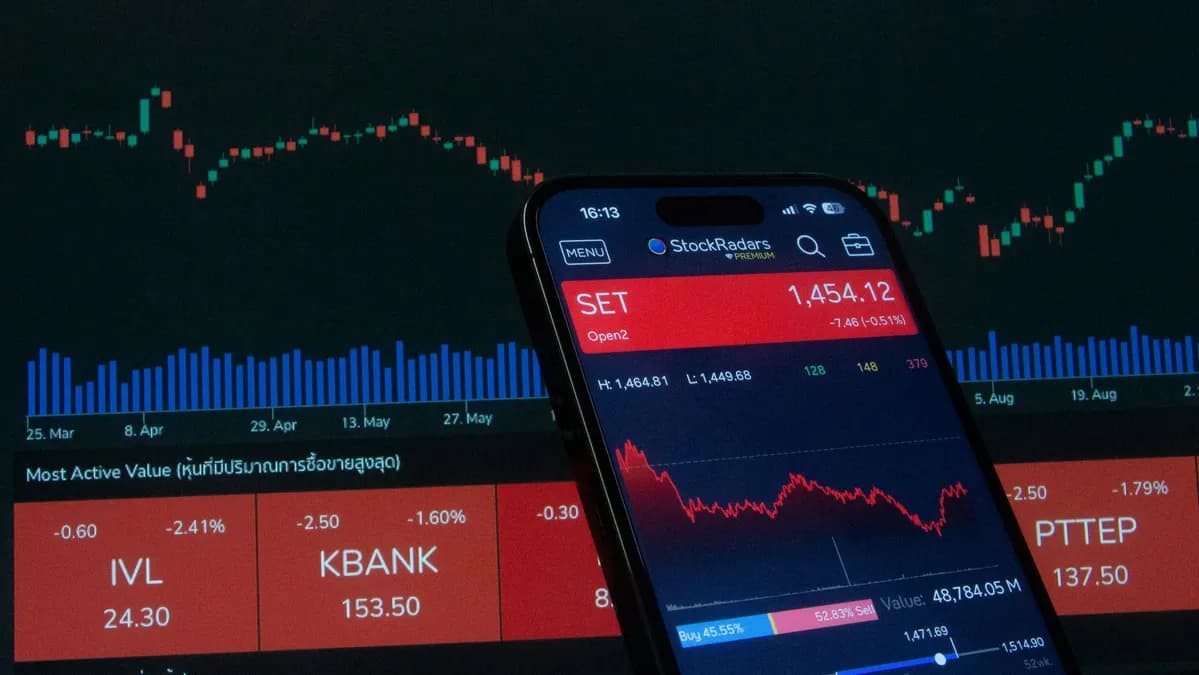
The myth of market timing versus 50 years of historical data
For decades, the debate between "market timing" and "time in the market" has stirred investors and professionals. The intuitive idea of selling before major declines and buying before rises seems appealing. However, empirical analysis of stock market data over several decades reveals a much more nuanced, often counterintuitive reality.
A recent study by JP Morgan Asset Management (2023) quantifies this issue over the period 2003-2022. The average annual return of the S&P 500 during this period is +9.8% (annualized total return). Removing the 10 best days drops this return to +5.6% per year, while missing the 30 best days reduces it dramatically to +1.7% per year. This simple observation illustrates the difficulty of market timing: the most profitable days are crucial for overall performance and missing them is costly.
| Scenario | Average annual return S&P 500 (2003-2022) |
|---|---|
| Continuously invested | +9.8% |
| Misses the 10 best days | +5.6% |
| Misses the 30 best days | +1.7% |
The best days often come right after the worst: a trap for timers
An often overlooked aspect is the temporal concentration of the best days, which frequently occur immediately after the steepest declines. For example, after the Black Monday crash in October 1987 (-22.6% in one day), the following days recorded spectacular rebounds. The same happened in March 2020, during the crash caused by the COVID-19 pandemic, where several of the best sessions occurred in the weeks that followed. This extreme volatility makes market timing almost impossible: selling during a major drop exposes one to missing a sharp rebound.