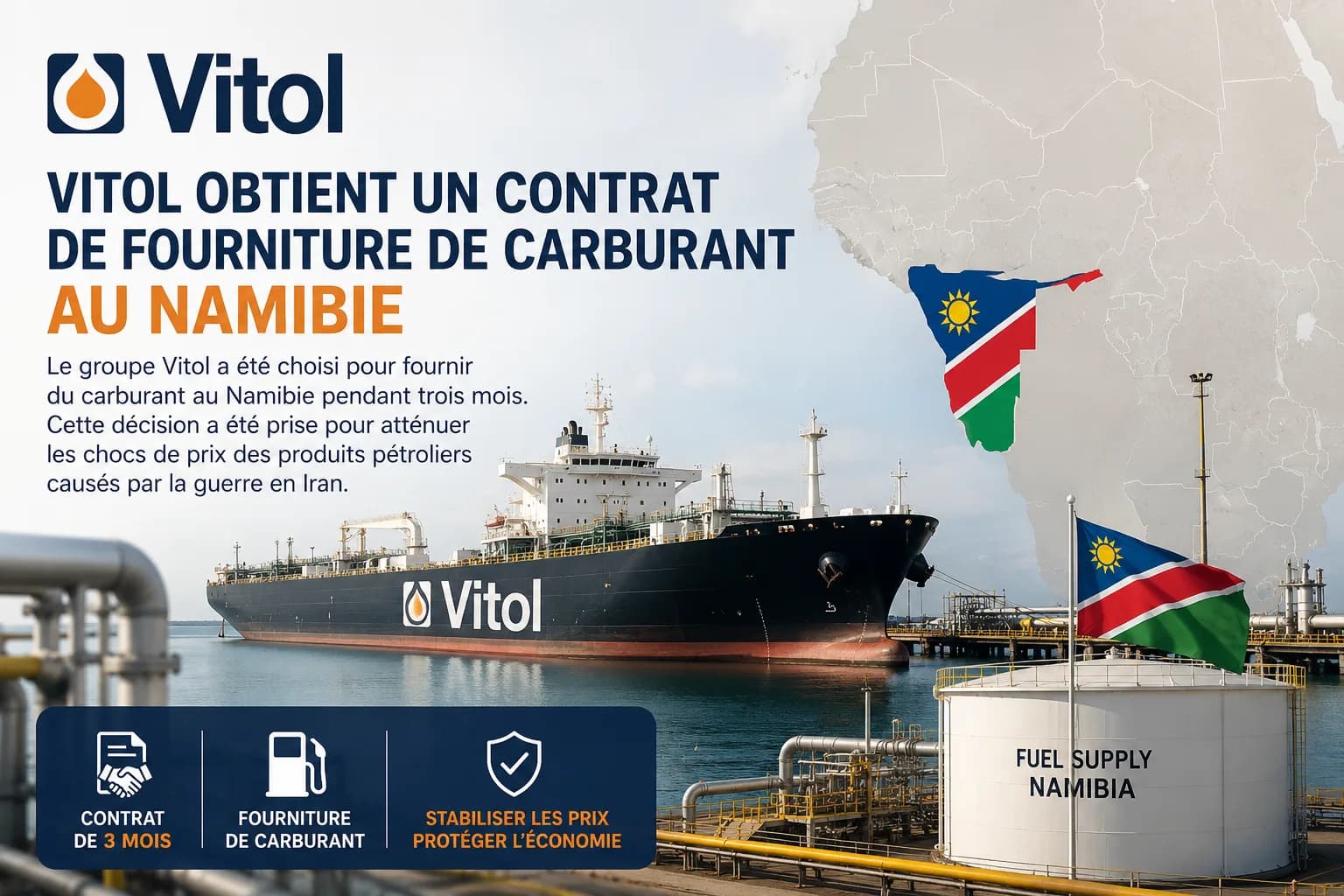
The Vitol group has been chosen to supply fuel to Namibia for three months. This decision was made to mitigate the price shocks of petroleum products caused by the war in Iran.
The Vitol group has been chosen to supply fuel to Namibia for three months, according to information published by Bloomberg. This decision was made to mitigate the price shocks of petroleum products caused by the war in Iran.
Vitol Wins Fuel Supply Contract
The fuel supply contract in Namibia has been awarded to Vitol for a period of three months, from July to September. This decision aims to reduce the impact of fluctuations in petroleum product prices on the Namibian economy. The economic mechanism behind this decision is based on the need to stabilize petroleum product prices, which are essential for the functioning of the economy. Indeed, petroleum products are used in many sectors, such as transportation, industry, and agriculture, and fluctuations in their prices can have significant consequences on inflation and economic growth.
The Namibian government likely chose Vitol due to its expertise and experience in the field of fuel supply. Vitol is one of the largest oil traders in the world, with a presence in over 40 countries. The company has a long history of supplying fuel to developing countries, and it is known for its ability to provide high-quality products at competitive prices.
Context of the Decision
The war in Iran has led to an increase in petroleum product prices, which has had a negative impact on the economies of many countries, including Namibia. To mitigate these effects, the Namibian government decided to enter into a fuel supply contract with Vitol. This contract will allow Namibia to benefit from a stable fuel supply, which is essential for the functioning of the economy.
The political context of this decision is also important. The war in Iran has created a situation of tension in the region, which has led to an increase in petroleum product prices. The Namibian government likely took this situation into account when making its decision, and it chose to enter into a contract with Vitol to guarantee a stable fuel supply.
Consequences on Energy Markets
The decision to choose Vitol as a fuel supplier in Namibia could have consequences on energy markets. Petroleum product prices may be more stable, which could have a positive impact on the Namibian economy. Indeed, fluctuations in petroleum product prices can have significant consequences on inflation and economic growth, and price stability can help reduce these risks.
The consequences on energy markets could also be felt internationally. The Namibian government's decision to enter into a contract with Vitol could influence the decisions of other developing countries, which may also choose to enter into contracts with oil trading companies to guarantee a stable fuel supply.
Impact on Energy Assets
Investors who hold energy assets may be interested in this decision. The prices of energy company stocks may be affected by this news, as well as the prices of energy ETFs. Indeed, investors may consider the Namibian government's decision to enter into a contract with Vitol as a sign of stability and confidence in energy markets, which could have a positive impact on energy asset prices.
It is important to note that the consequences of this decision on energy markets and energy assets will likely be felt in the long term. The Namibian government's decision to enter into a contract with Vitol is a short-term measure to mitigate the effects of the war in Iran, but it could have long-term consequences on energy markets and energy assets.
The economic mechanism behind this decision is complex and involves many factors, such as petroleum product prices, currency fluctuations, interest rates, and investor decisions. To understand the consequences of this decision, it is essential to take these factors into account and analyze them in the context of energy markets and energy assets.
Finally, it is essential to note that the Namibian government's decision to enter into a contract with Vitol is an example of the complexity of energy markets and energy assets. The decisions made by governments and companies can have significant consequences on energy markets and energy assets, and it is essential to understand these consequences to make informed investment and risk management decisions.
The Namibian government likely took the following factors into account when making its decision: petroleum product prices, currency fluctuations, interest rates, investor decisions, political and economic factors. By analyzing these factors, it is possible to understand the consequences of the Namibian government's decision to enter into a contract with Vitol and make informed investment and risk management decisions.
The Namibian government's decision to enter into a contract with Vitol is an example of how governments and companies can work together to mitigate the effects of fluctuations in petroleum product prices. By entering into a contract with Vitol, the Namibian government was able to guarantee a stable fuel supply, which is essential for the functioning of the economy. This decision also shows that governments and companies can take measures to reduce their dependence on petroleum products and promote alternative energy sources.
In conclusion, the Namibian government's decision to enter into a contract with Vitol is an example of the complexity of energy markets and energy assets. The decision was made to mitigate the effects of the war in Iran and to guarantee a stable fuel supply. The consequences of this decision will likely be felt in the long term and could have a significant impact on energy markets and energy assets. It is essential to understand the factors that influenced the Namibian government's decision and to take into account the potential consequences of this decision to make informed investment and risk management decisions.
It is important to note that the consequences of the Namibian government's decision to enter into a contract with Vitol will likely be felt in many sectors, such as transportation, industry, and agriculture. Fluctuations in petroleum product prices can have significant consequences on these sectors, and the Namibian government's decision to enter into a contract with Vitol could contribute to reducing these risks.
Finally, it is essential to take into account the political and economic factors that influenced the Namibian government's decision to enter into a contract with Vitol. The decision was made in a context of tension in the region, and it shows that governments and companies can work together to mitigate the effects of fluctuations in petroleum product prices.