Bitcoin and Nasdaq Futures Plunge Amid Trump's Uncertainty Over New Strikes on Iran
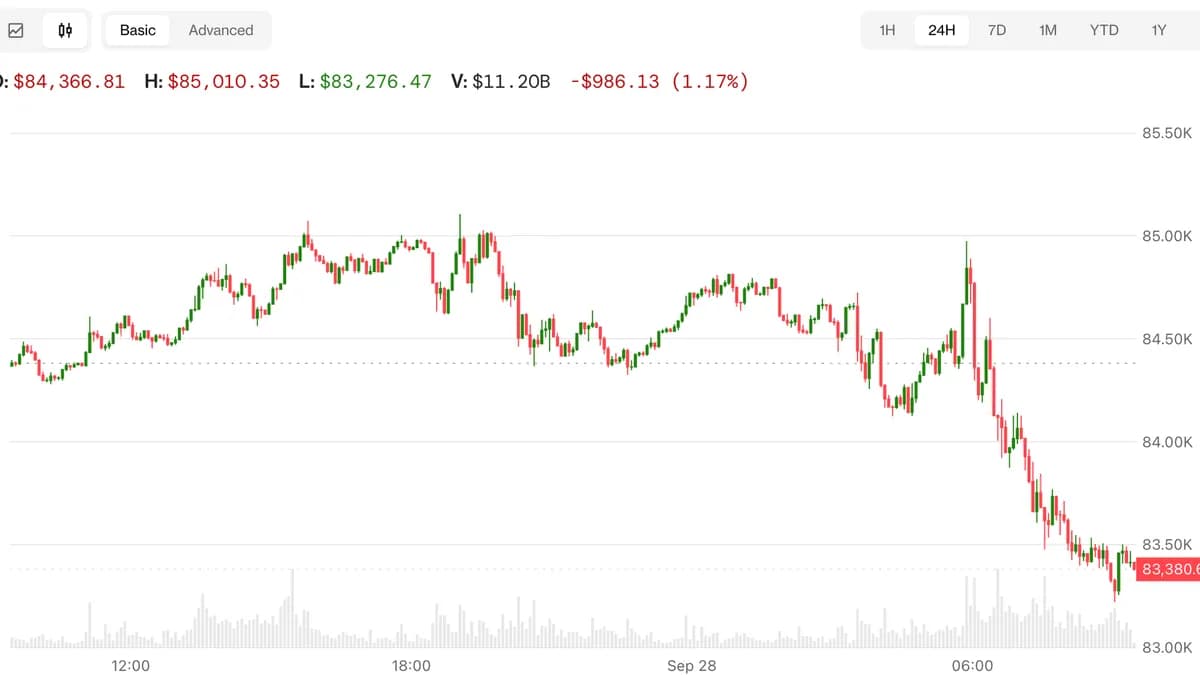
Bitcoin dropped 1.3% to $83,324, while Nasdaq futures fell 0.7% following comments from U.S. President Donald Trump, who declined to rule out new American strikes against Iran before the midterm elections, reigniting fears of inflation and market volatility.
Bitcoin dropped 1.3% to $83,324, while Nasdaq futures fell 0.7% after U.S. President Donald Trump refused to rule out new American strikes against Iran before the midterm elections.
Trump Holds Open the Threat of New Strikes Against Iran
During an interview with Fox News, President Trump stated: "I don't want to say that. I mean, it's possible, but I just don't want to say that," leaving the door open to military escalation before the November midterm election. He added that the U.S. "won the war via both military and economic pressure" and reaffirmed that Iran "cannot have a nuclear weapon." These remarks, aired on September 27, immediately heightened geopolitical tensions, which had already been high since the conflict began in March.
Iranian Foreign Minister Abbas Araghchi responded by stating that his country was "fully prepared" for a new conflict, even suggesting the possibility of a "doomsday war." Meanwhile, Iran proposed a seven-day agreement to reopen the Hormuz Strait to the General Assembly, a crucial oil passage, but Trump rejected it, arguing that Iran was attempting to negotiate under duress.
Bond and Oil Markets React to Geopolitical Tensions
Geopolitical uncertainties pushed up U.S. Treasury yields. The 10-year Treasury note yield jumped 127 basis points, reaching 5.20%, its highest level since 2007. This rise reflects heightened inflation fears, bets on further Federal Reserve rate hikes, and concerns over sovereign debt.
Meanwhile, West Texas Intermediate (WTI) crude futures rose nearly 1%, reaching $93.28, while Brent showed a similar increase. Fears of disruptions to oil traffic through the Hormuz Strait fueled this surge, reminiscent of the energy market's sensitivity to Middle Eastern conflicts.
Nasdaq and Bitcoin Plunge Simultaneously
Nasdaq futures, the benchmark tech index, fell 0.7% at the start of the week, reflecting investor nervousness amid geopolitical uncertainty. Bitcoin, meanwhile, dropped 1.3% to $83,324, with major altcoins following suit: Ethereum at $2,659.42, and XRP and Solana showing similar losses.
This synchronized movement highlights the growing correlation between digital assets and traditional markets during times of international crisis, as liquidity needs and risk revaluation come into play.
Bitcoin Technical Analysis: Support and Resistance Zones
Vikram Subburaj, CEO of the crypto analysis platform, noted that "the 83,800-84,000 zone is an important near-term support. The 85,000-85,800 area is the immediate resistance zone. It would be prudent to avoid chasing the rally at current levels." Translation: The $83,800-$84,000 range is a key short-term support, while $85,000-$85,800 represents immediate resistance, and it's wise not to pursue gains until these levels are breached.
On the daily chart, Bitcoin is just below the identified support level, which explains the selling pressure observed. Momentum indicators like RSI are hovering around 45, suggesting a neutral dynamic but sensitive to any new geopolitical shock.
Bitcoin's Uptrend Persists Over Three Months
Despite the day's decline, Bitcoin has gained 42% over the past three months, outperforming major assets, including Nasdaq and gold. This performance reflects its ability to rebound after each wave of volatility, supported by increasing institutional demand and its safe-haven appeal amid inflation.
Analysts highlight that the third-quarter rebound was fueled by inflows into Bitcoin funds and a revival of European investor interest, though no specific on-chain data was provided in the initial report.
Investors Face Geopolitical Uncertainty in Crypto Markets
Markets are now closely monitoring upcoming U.S. economic indicators— inflation, industrial production, and employment data—which could amplify already high volatility. Analysts suggest that a combination of possible military escalation and stricter U.S. monetary policy could prompt investors to reassess their crypto positions, particularly by respecting the identified support zones.
With no new on-chain data available, caution remains advisable. Risk management strategies, such as placing stops near the $83,800 support level, are recommended to limit potential losses in case of further conflict escalation.