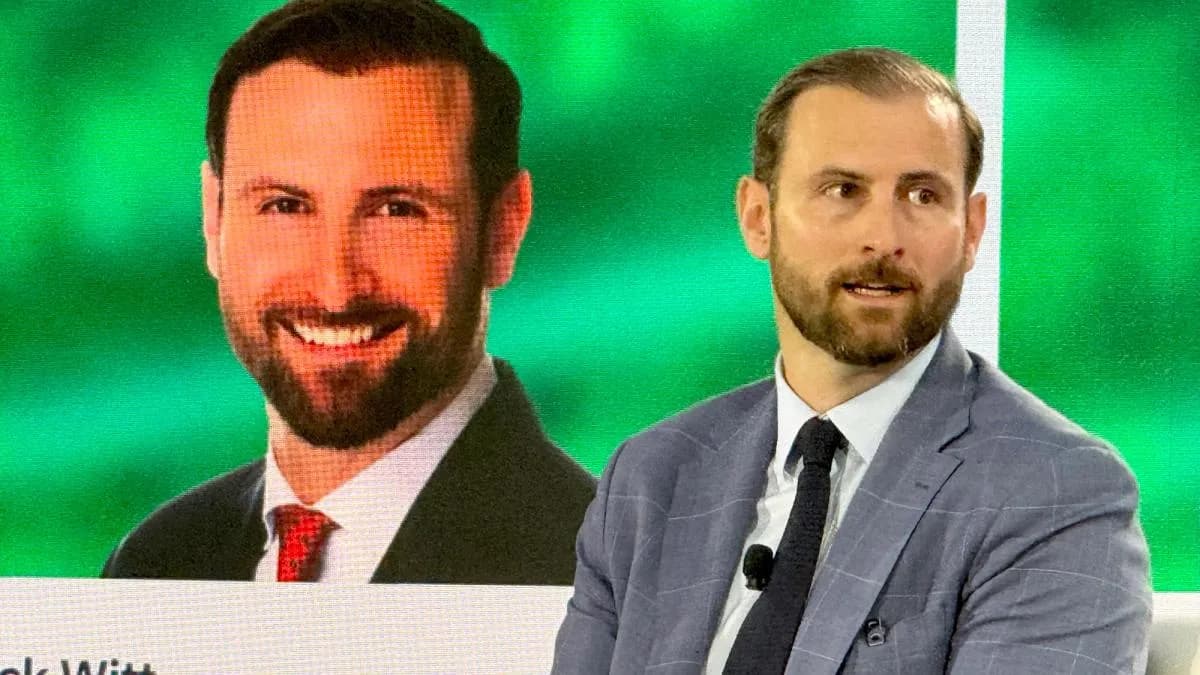
Patrick Witt's Departure: The White House Lacks a Crypto Advisor—What Does It Mean for Regulation?
White House Crypto Advisor Patrick Witt Has Departed, Leaving the Digital Assets Office Without Clear Direction. Despite Trump Administration Claims That Crypto Remains a Priority, No Successor Has Been Named, Creating Significant Regulatory Uncertainty.
The departure of Patrick Witt, White House crypto advisor, leaves the digital assets office vacant, suspending any clear direction on President Trump's digital policy.
Patrick Witt Leaves the White House; Crypto Advisor Role Remains Vacant
Announced on October 15, 2026, Witt's departure didn't surprise observers but removes the last official figure responsible for crypto policy within the executive branch. According to CoinDesk, a White House official expressed appreciation for Witt's work and wished him "the best of luck in future endeavors." No successor has been named, and the position remains vacant.
Nevertheless, the White House maintains that crypto remains a presidential priority. A spokesperson stated that the "Crypto and Clarity Act will continue to be a priority for the president," reiterating the administration's legislative commitment despite the lack of an internal figurehead.
New AI Czar Named After Witt's Departure Without Crypto Mandate
Several days after Witt's departure, the administration announced the appointment of a new AI czar without mentioning any crypto mandate. This decision signals a refocus of priorities, with the crypto role now absent from the responsibilities of the new AI chief.
This omission creates an institutional vacuum: crypto initiatives no longer benefit from a dedicated coordinator within the presidential cabinet, which could slow the implementation of ongoing legislative or executive actions.
The Digital Assets Council, Created in 2025, Loses Its Public Face After Witt's Absence
The digital assets council was established before Trump's return to the White House in 2025, when the president-elect appointed David Sacks, former PayPal leader, as AI and crypto czar. Bo Hines, a former college football player, was designated as the first director of the council, quickly becoming its public face.
Hines led frequent meetings with sector actors and participated in conferences before leaving his post after approximately eight months, coinciding with a major legislative victory for the council. His departure, followed by Witt's absence, left the council without an identifiable spokesperson.
Congress Could Still legislate Before November Elections, According to Washington Sources
Sources in Washington, cited by CoinDesk, estimate that the final weeks of the congressional session, which closes after the November elections, could still see legislative measures adopted in favor of crypto assets. The "Crypto and Clarity Act" remains at the heart of discussions, even if executive support is unclear.
Without a dedicated White House advisor, the legislative process risks depending more on pressures exerted by congressional committees and federal agencies rather than a coordinated strategy from the executive branch.
Federal Agencies, Including the SEC, Continue Regulatory Review Despite the White House Vacuum
Despite the lack of internal leadership, several federal agencies, notably the Securities and Exchange Commission (SEC), continue to advance on crypto asset regulatory matters. The text indicates that the White House has several "crypto regulatory irons in the fire" within these institutions.
This dynamic shows that, even in the absence of a dedicated advisor, U.S. regulatory mechanisms remain active. However, the vacuum at the White House leaves uncertainty about the overall direction of digital policy, a point emphasized by the spokesperson who reaffirmed the priority of the "Crypto and Clarity Act."
With no clearly identified successor, U.S. policy on digital assets remains on hold, as market actors closely monitor signals from Congress and federal agencies.