Fed Increases Benchmark Rate by 0.25 Points, Warsh Calls It a "Dose of Accommodation" as Markets Anticipate Further Hikes
The Federal Reserve raised its benchmark rate by 0.25 points for the first time since 2023, and Chair Kevin Warsh characterized the move as a "dose of accommodation." This semantic shift has sparked speculation about the depth of future monetary tightening.
The Federal Reserve increased its benchmark rate by 0.25 percentage points, marking the first hike since late 2023. The Committee approved this increase during the September 2026 meeting, highlighting that the decision was made possible by an "strengthening" economy and less restrictive financial conditions. Chair Kevin Warsh presented this movement as the removal of a "dose of accommodation" rather than a brutal tightening. (CNBC, Sept. 18, 2026)
Fed Increases Benchmark Rate by 0.25 Points
The 0.25-point increase represents the first monetary policy adjustment since the end of 2023, ending a period of relative rate stability. This decision was made as inflation remains above the Fed's 2% target, justifying another step toward normalization. Market participants immediately incorporated the expectation of additional hikes into their valuation models. Analysts noted that bond yields began to rise, reflecting a reassessment of interest rate risk.
The official statement emphasized that the hike was "possible because the U.S. economy appears to be strengthening," a formulation that contrasts with the more cautious warnings of previous years. At the same time, the Board indicated that financial conditions have become "less restrictive," suggesting that liquidity pressures have eased. This dual reading reinforces the idea that the Fed views itself as having room to continue its tightening cycle.
Warsh Calls the Hike a "Dose of Accommodation"
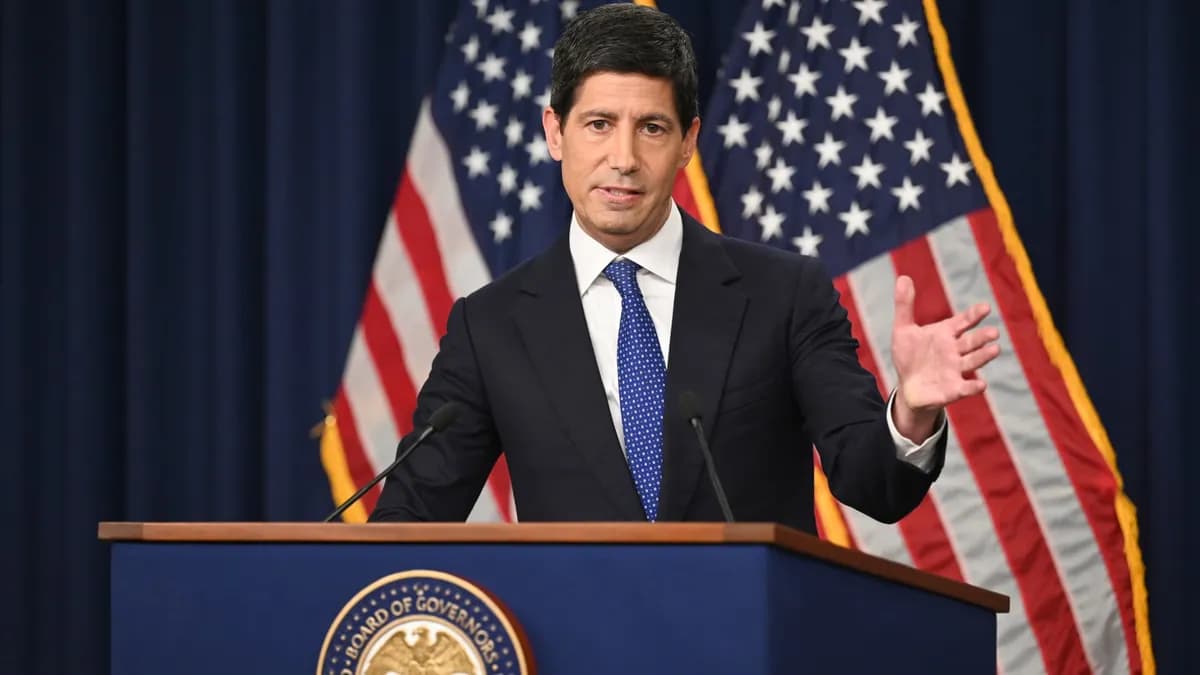
During the press conference, Kevin Warsh repeatedly described the Fed's action as simply removing a "dose of accommodation" from the economic system. This unusual phrase in the central bank's vocabulary was perceived as a signal of tonal change. Warsh stressed that removing a small portion of support did not represent a radical shift but rather a gradual step toward a more neutral policy stance. (CNBC, Sept. 18, 2026)
Krishna Guha, head of economic strategy at Evercore ISI, commented that this phrase was "the only hawkish element that stands out" in Warsh's speech and that it had been deliberately repeated. According to him, the framing differs substantially from what the Fed has used in recent years and opens the door to a more open approach regarding the number of hikes needed. Guha emphasized that the lexical choice was intentional and aimed at preparing markets for a possible escalation of tightening.
Economic Context: A Strengthening Economy and Less Restrictive Financial Conditions
Warsh justified the decision by citing an American economy showing signs of strength, including a jobs recovery and GDP growth exceeding expectations. He also noted that financial conditions, measured by credit spreads and short-term interest rates, had loosened, giving the Fed more latitude to act. This reading contrasts with the fears of recession that dominated discussions in 2024-2025.
The concept of the neutral rate—the one that neither accelerates nor decelerates growth—was recalled as the policy anchor. By removing a "dose of accommodation," the Fed moves the effective rate closer to the neutral level, making policy less accommodative. Warsh's speech suggests that the Fed now stands above the neutral rate, which, according to monetary theorists, indicates a restrictive stance.
Market Reactions: Bond Yields, Equities, and Currencies
Bond markets immediately reacted, with 10-year Treasury yields rising by several basis points, reflecting the reevaluation of interest rate risk. Investors adjusted their portfolios toward shorter-term assets, anticipating further hikes. Analysts noted that credit spreads had tightened slightly, signaling increased confidence in businesses' ability to absorb higher borrowing costs.
Equities saw increased volatility, with the S&P 500 showing a moderate decline while the CAC 40 registered a slight correction. Sectors sensitive to rates, such as real estate and utilities, were most impacted, while technology stocks showed relative resilience. In the foreign exchange market, the dollar strengthened against the euro and yen, traders anticipating more favorable interest rate differentials for the United States.
Outlook: Continuing Monetary Tightening
The Fed reaffirmed its goal of bringing inflation back to 2% and indicated that rate hikes remain the primary tool to curb excess demand. Warsh emphasized that current policy aims to gradually remove excessive support without causing economic shock. This gradual approach suggests that additional 0.25-point increases could be considered if inflation data remains elevated.
Market forecasts now incorporate several more hikes over the coming months, though the exact magnitude remains uncertain. Analysts are closely monitoring data on employment, consumption, and producer prices to assess the need for a more aggressive tightening. In the absence of new signs of disinflation, the Fed appears ready to continue its rate hike cycle, consistent with the logic of removing a "dose of accommodation."