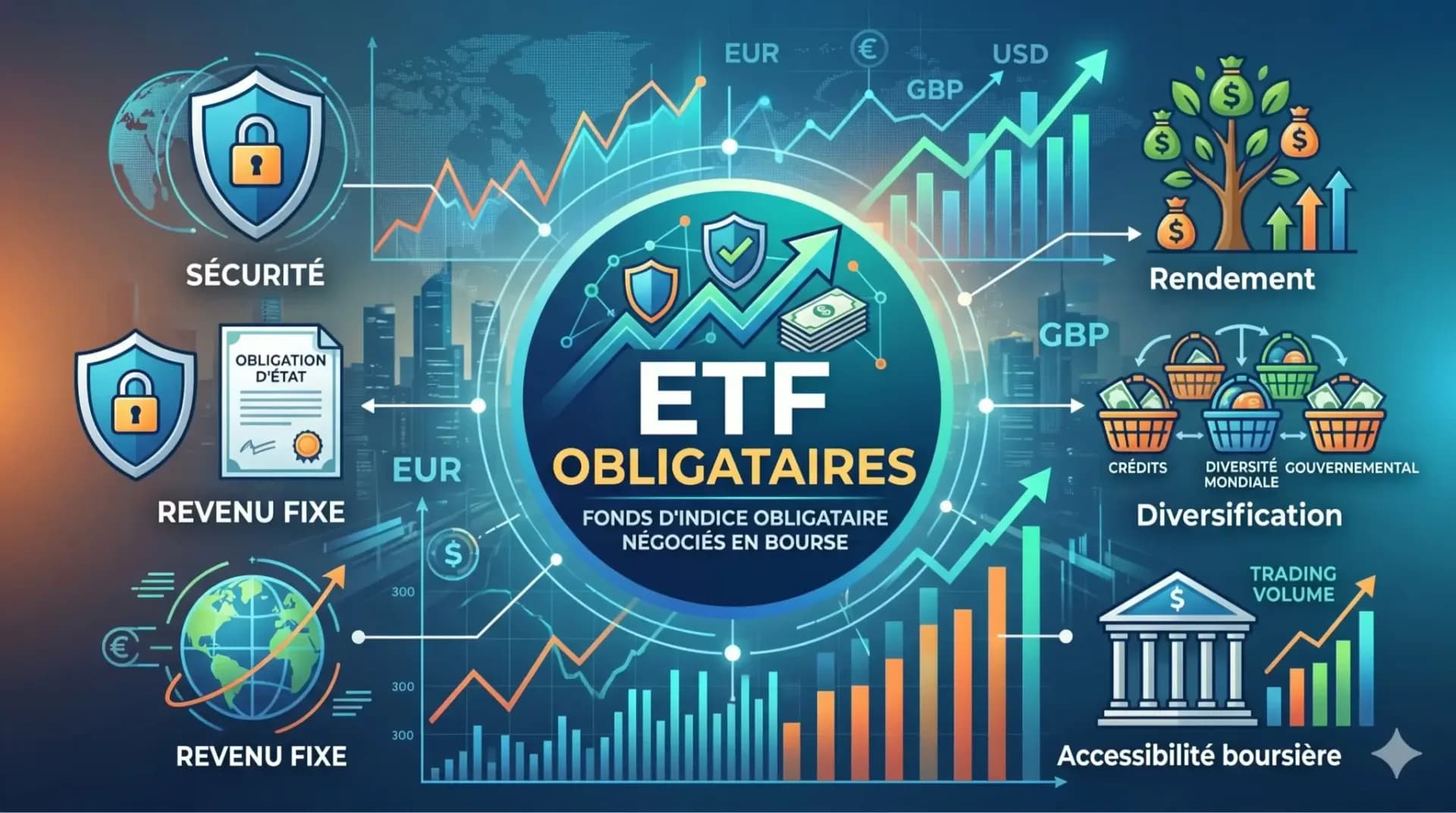
Investors are taking short positions against bond funds, particularly BlackRock's ETFs, according to Bloomberg Markets. This trend is impacting bond markets and equities, with consequences worth monitoring.
Equity Traders Are Increasingly Taking Short Positions Against BlackRock's Bond ETFs
Equity traders are increasingly taking speculative short positions against bond funds, particularly those managed by BlackRock, notably its LQD and HYG ETFs, according to a recent Bloomberg Markets report. This trend reflects growing investor confidence in an economic environment where bonds may be vulnerable to price fluctuations.
The Context of Equity Traders
Equity traders, or short-sellers, are investors who bet on the decline in prices of specific assets. In the case of bond ETFs, such as BlackRock's Short-Term High Quality Bond ETF (LQD) and iShares Core U.S. High Yield Corporate Bond ETF (HYG), these traders borrow shares or bonds, sell them with the expectation that their price will drop, and then buy them back at a lower price later to return them. This strategy is often used to speculate on a decline in asset quality or an increase in interest rates, which would reduce the value of bonds.
For example, the LQD tracks an index of highly rated corporate bonds, while the HYG focuses on lower-quality corporate bonds. Equity traders estimate that these assets could suffer if bond yields rise or if loan quality deteriorates, thereby reducing their value.
It is important to understand that interest rates have a direct impact on the value of bonds. When interest rates rise, newly issued bonds with higher interest rates become more attractive compared to existing bonds with lower interest rates. This leads to a decline in the value of existing bonds, as investors prefer new bonds with higher interest rates.
The increasing short positions on these ETFs reflects a shared investor belief that bonds may suffer in an economic environment where interest rates are expected to rise. Investors often speculate on major changes, such as a recession or a decline in asset quality, to justify these positions.
Historically, equity traders tend to focus on highly liquid ETFs like the LQD and HYG because their liquidity makes them easier to trade. These ETFs are also sensitive to interest rate fluctuations, making them more attractive to speculators.
Investors should understand that bond ETFs are not without risk. Fluctuations in interest rates, changes in asset quality, and general economic conditions can all impact the value of bonds. Equity traders take these factors into account when taking short positions on bond ETFs.
The Implications for Financial Markets
The increasing short positions on these ETFs have significant repercussions for financial markets. First, this can signal a decline in the prices of bonds linked to these ETFs, which translates into higher yields for investors holding these securities. Second, intense speculative activity can increase market volatility, affecting the entire financial landscape.
ETFs such as the MSCI World CW8 and S&P 500 PEA could be indirectly impacted, as their performance is tied to the state of equity and bond markets. A deterioration in conditions for bonds could lead to reduced investments in these ETFs, thereby affecting the broader market.
It is also important to consider the impact of market volatility on investors. Fluctuations in bond prices can make investments riskier, which may deter investors from taking positions. This can have a negative impact on the overall market, as investors often prefer more stable and predictable assets.
The Impact on European Assets
European markets are not spared by this trend. For example, CAC 40 stocks and French sovereign bonds could be influenced if investment flows into bond ETFs decrease or if risks associated with bonds increase. European investors must therefore closely monitor these developments, as they can affect their portfolios in a more direct way than anticipated.
In France, exposure to bond ETFs is particularly significant, making the situation of equity traders even more critical. French investors must therefore stay informed about global trends and adjust their strategies accordingly.
European investors must also take into account the implications of monetary policy on financial markets. Central banks, such as the European Central Bank, can influence interest rates and credit conditions, which can impact bonds and bond ETFs. Investors must therefore closely monitor monetary policy decisions and adjust their strategies accordingly.
The Reactions of Investors
面对 cette tendance, les investisseurs réagissent en ajustant leurs portefeuilles. Certains choisissent de se protéger en prenant des positions couvertes ou en utilisant des options pour limiter leur exposition au risque. D'autres optent pour une diversification accrue, en investissant dans des classes d'actifs moins sensibles aux fluctuations des obligations, comme les actions de croissance ou les biens immobiliers.
Les professionnels des marchés conseillent vivement de rester informé et de consulter des sources fiables comme Bloomberg pour prendre des décisions éclairées. La compréhension des mécanismes sous-jacents, tels que les effets de levier associés aux positions en short ou les impacts des taux d'intérêt sur les obligations, est essentielle pour naviguer dans cet environnement en constante évolution.
Les investisseurs doivent également être conscients des coûts associés aux transactions et aux stratégies d'investissement. Les frais de transaction, les commissions et les autres coûts peuvent rapidement s'additionner et réduire les rendements des investissements. Les investisseurs doivent donc choisir des stratégies d'investissement qui minimisent les coûts et maximisent les rendements.
The Lessons for Investors
This trend highlights the importance of vigilance and understanding of financial markets. Investors must not only stay informed about current trends but also understand the mechanisms driving them. For example, it is crucial to know how interest rates influence bond values or how ETFs function on a daily basis.
Finally, investors must adapt their strategies based on emerging analyses and trends. This can involve reevaluating diversification, adjusting risk levels, or introducing options to protect against unwanted market movements. Investors must therefore remain flexible and adaptable to succeed in this constantly evolving environment.
Il est également important pour les investisseurs de considérer les implications à long terme de leurs décisions d'investissement. Les investissements dans les ETFs obligataires peuvent être sensibles aux fluctuations des taux d'intérêt et des conditions économiques, ce qui peut avoir un impact sur les rendements à long terme. Les investisseurs doivent donc prendre en compte les implications à long terme de leurs décisions d'investissement et adapter leurs stratégies en conséquence.